Tap water
In Thailand, tap water is not safe to drink. This does not mean that it is unhealthy or full of bacteria. At home, we wash the dishes and laundry with tap water, and we wash ourselves and brush our teeth with it. It is simply recommended that you do not drink it.
So how do you manage this on a day-to-day basis?
Whether living in a flat or a detached house, most Thais buy bottled water from small convenience shops or go to refill their empty bottles at a water dispenser.
There are drinking water dispensers on every street. The one closest to our house is 50 metres away. That’s about the average distance to find one anywhere in town, 50 to 100 metres.
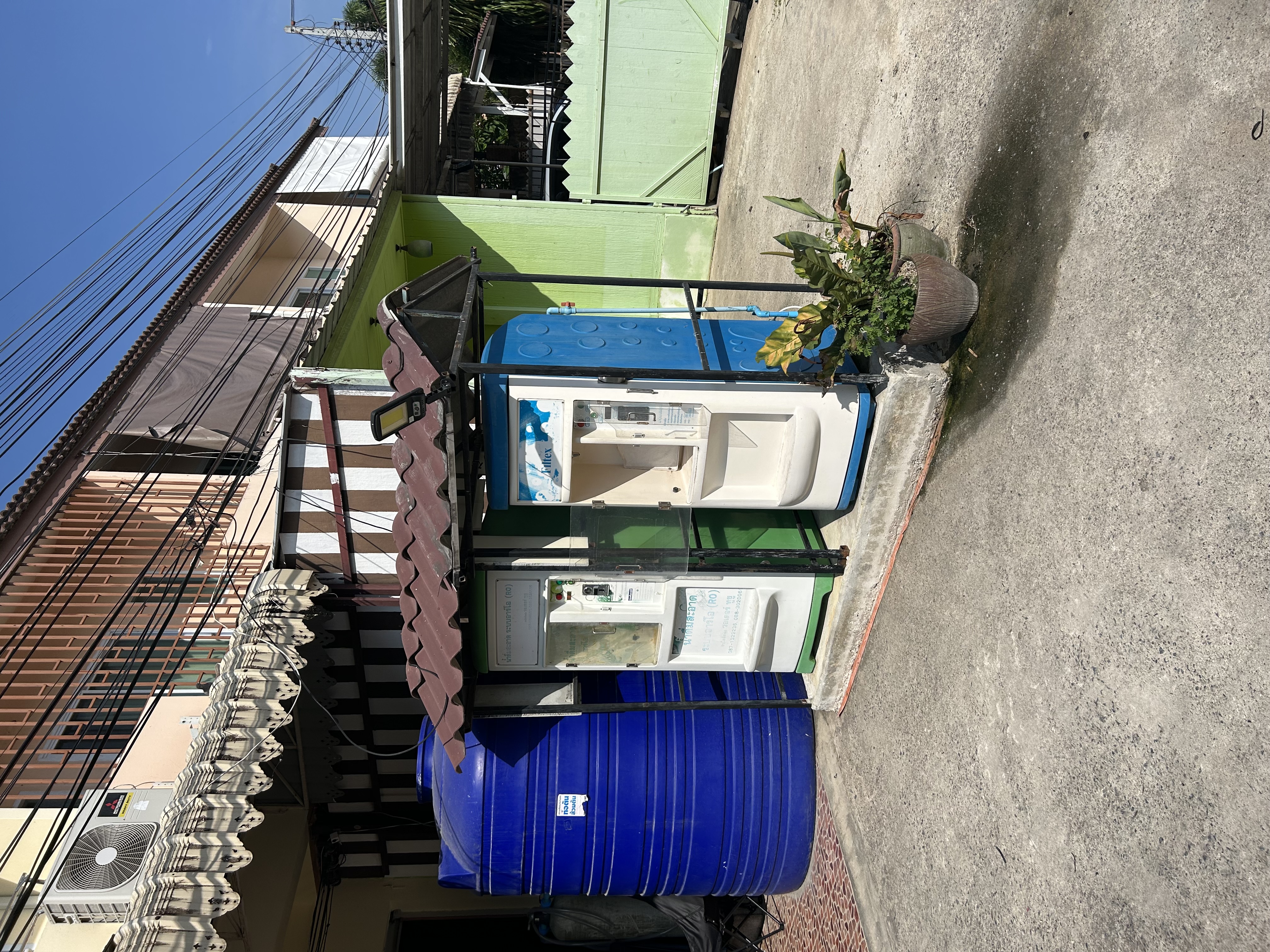
At these dispensers, you insert coins and fill the bottles one by one. It costs 1 baht per litre and provides a bit of exercise once or twice a week.
Wealthier Thais and many farangs
farang
farangs
"Farang" is a generic term for white Westerners, mainly used in Thailand and Laos. The word has Persian origins, coming from the word for "Franks," and has spread to refer to Western Europeans.
who live in detached houses have a filtration system installed, which is positioned between the mains supply and the house’s internal water system.
But going to the dispenser isn’t a major hassle. At home, Jarun takes care of it. She carries a huge bag of empty bottles on her scooter and when she comes back, I take them to the kitchen to store them. You often see Thais coming to the water dispenser on a scooter or sometimes in a pick-up truck with small plastic bottles in the back.
Toilets
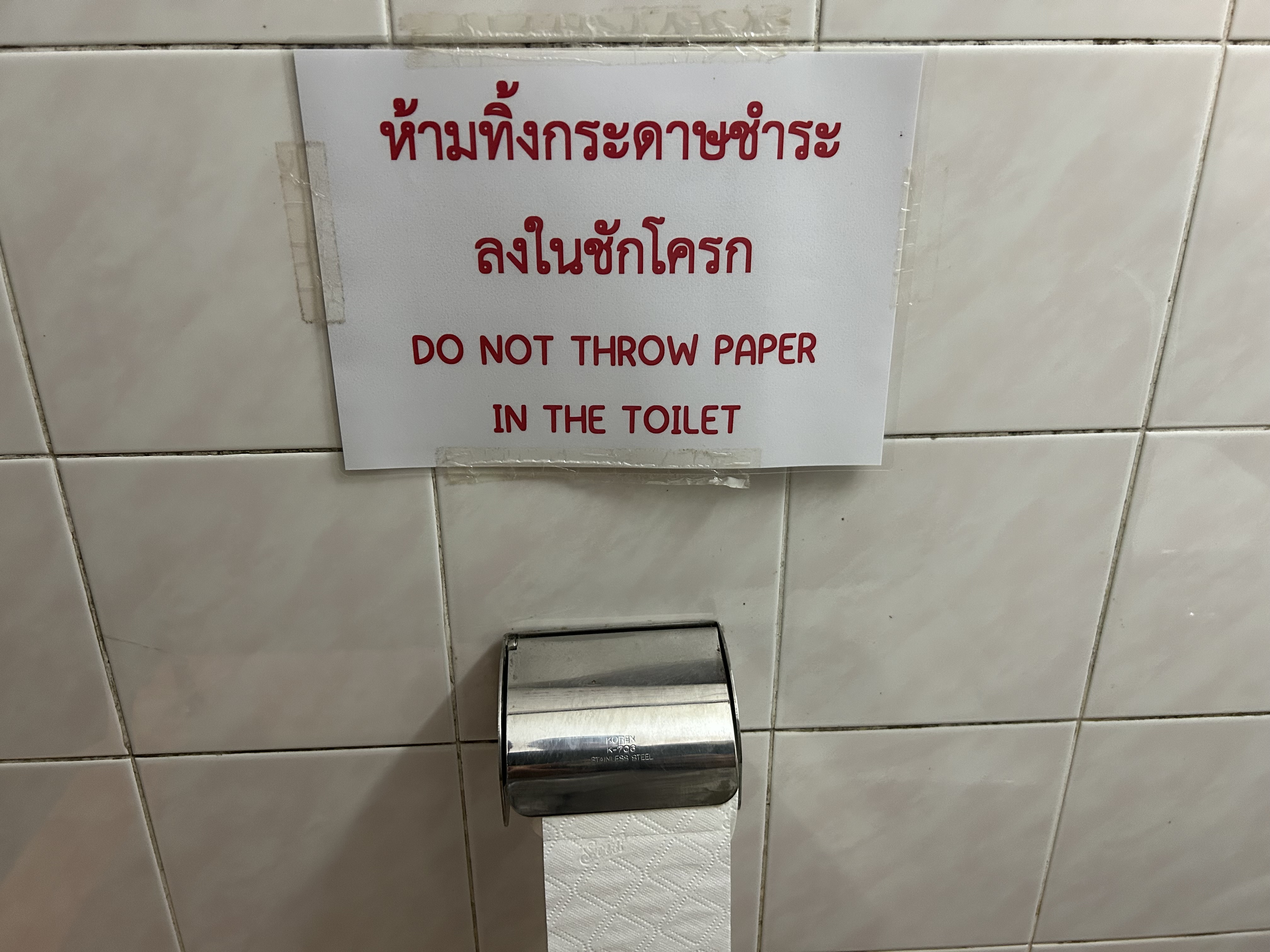
Most of the time, toilet drains aren’t designed to handle toilet paper. I don’t know if it’s a question of water treatment or the diameter of the pipes; the fact remains that in many places—hotels, public spaces, changing rooms, etc.—there is a small sign instructing you not to put the paper in the toilet bowl, but in the bin next to it.