

Invited by a friend of Run, my partner, we came to spend a few days in Chumpon.
Chumpon is a relatively small town, with a population of around 30,000, situated 2½ hours south of Hua Hin.
The town of Chumpon itself, which is also the provincial capital, isn’t actually on the coast, but lies about ten kilometres inland. It’s what travellers these days call an ‘authentic destination’. That term always makes me smile, as it basically means: a place that’s particularly appealing to tourists, but where I’ll be the only one there.
It’s a town where you’ll indeed come across very few farangs
farang
farangs
"Farang" is a generic term for white Westerners, mainly used in Thailand and Laos. The word has Persian origins, coming from the word for "Franks," and has spread to refer to Western Europeans.
and which has retained its ‘authentic character’, with few tourist facilities in the town itself.
Down by the sea, there are a few resorts. But in this low season, they were completely empty. And for the time being, the seafront is largely undeveloped and consists only of low-rise buildings; let’s hope it stays that way.
It’s clearly a town where I wouldn’t want to spend my retirement because I’d probably get bored there, particularly as there are hardly any golf courses and that’s my main hobby. There’s only one small nine-hole course Ket Udomsak
On the other hand, as a tourist destination, I think it’s a town with real appeal.
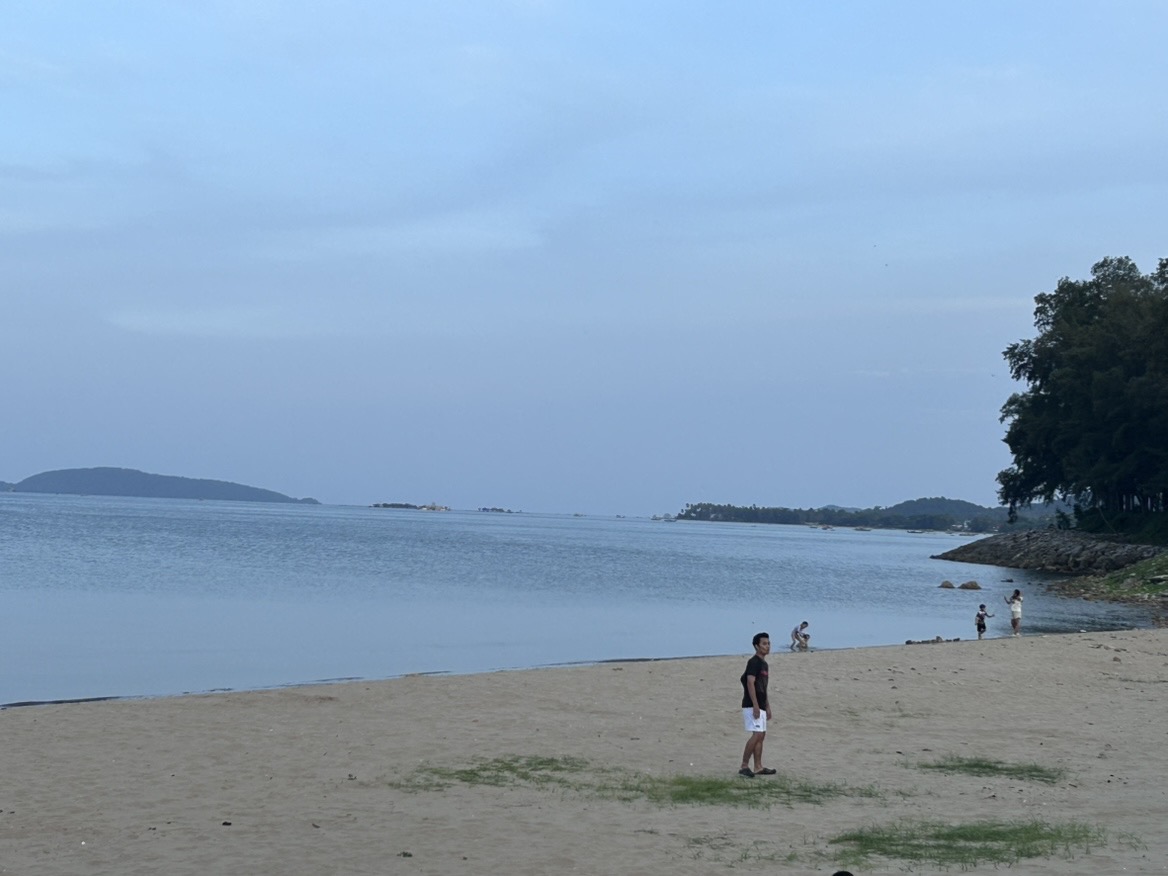
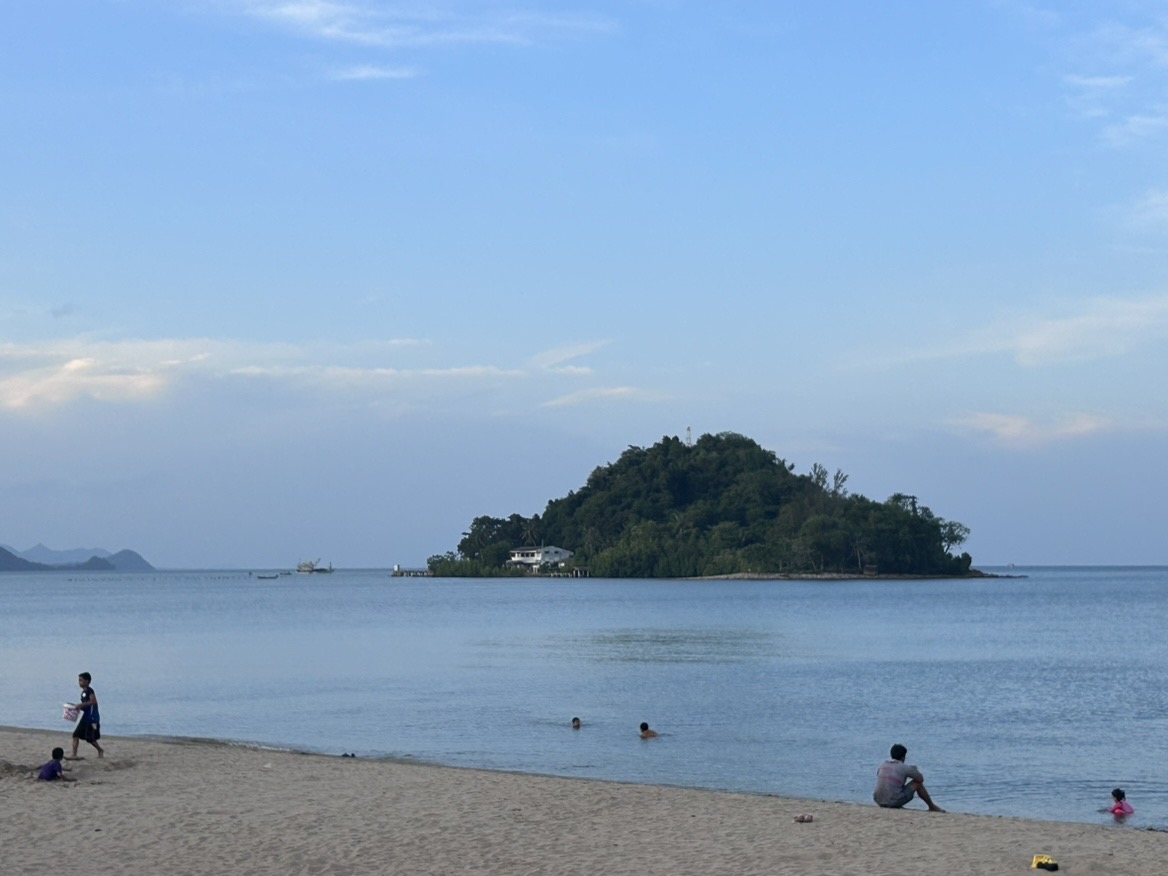
Firstly, for the coastline, which is quite magnificent, with several islands very close to the shore – some of which are probably accessible by kayak – and which seem quite unspoilt, whilst still boasting a few lovely beaches with fine sand.
Secondly, the surrounding countryside is very interesting, notably featuring a few rather remarkable national parks.
We only spent three days in Chumphon, but we’ll definitely be coming back because we didn’t have time to visit all the places of interest.
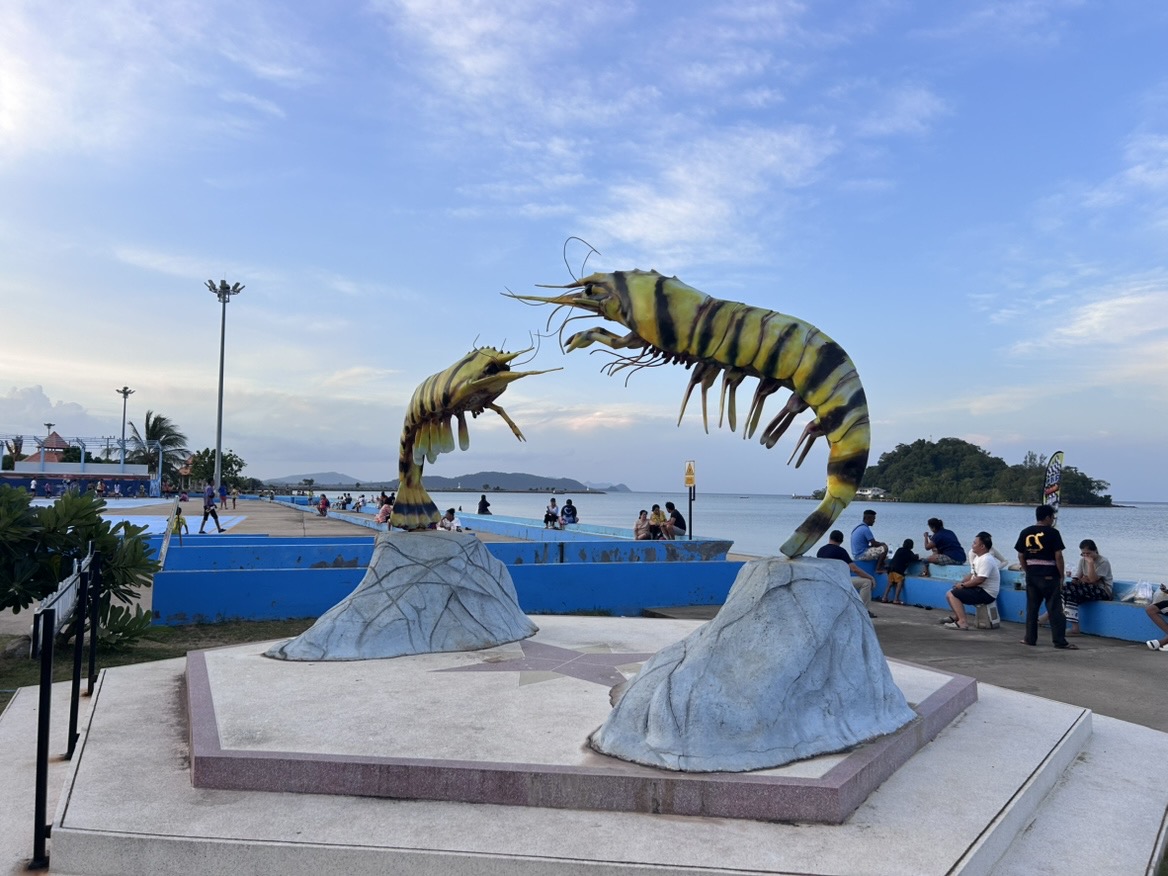
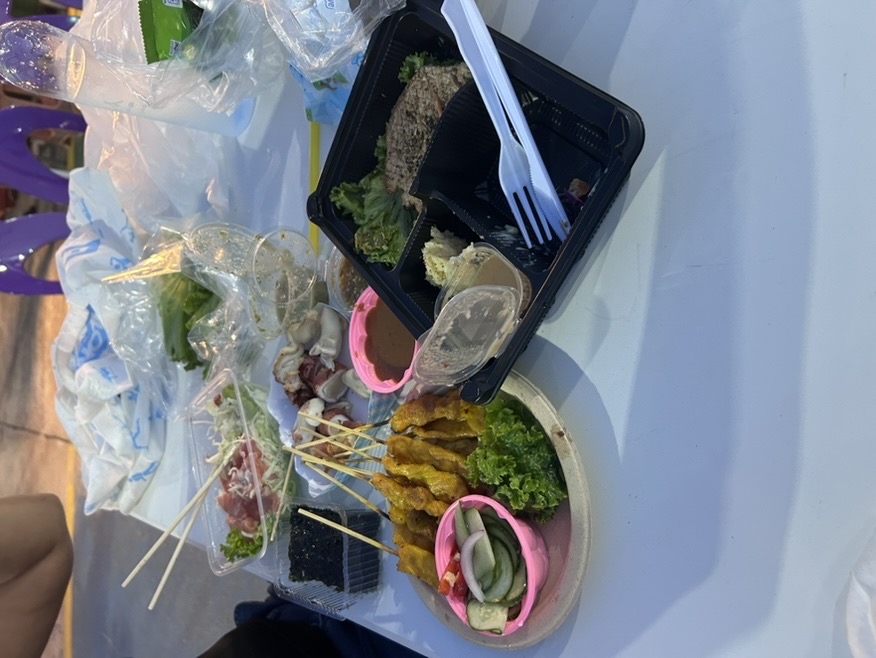
Among the places we really enjoyed were: the seafront, which is very lively in the evenings; a large night market with a bit of music, as is often the case; a wide choice of delicious, inexpensive food; and loads of Thai people having picnics on the beach. It’s great fun. 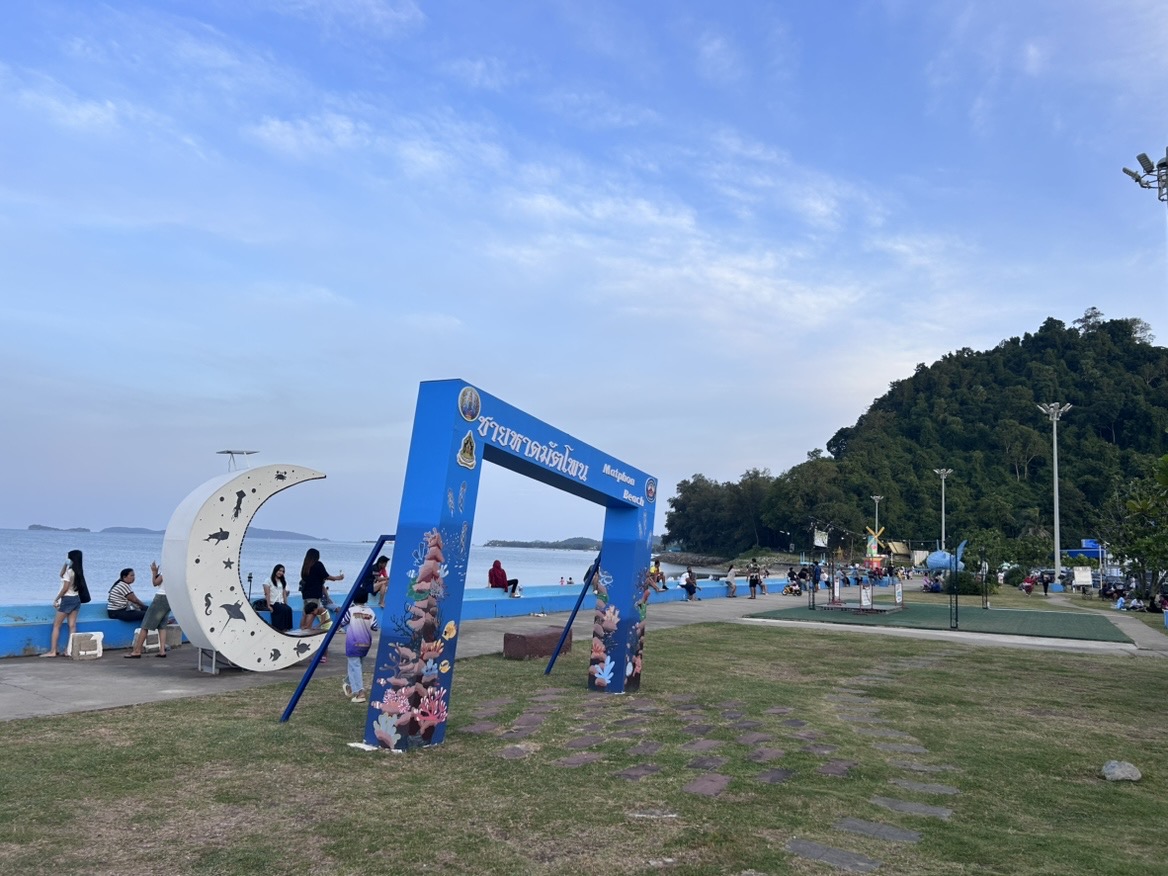
Just above this stretch of seafront, there’s an interesting viewpoint with a few small statues at the top and a café-restaurant that offers a very limited menu, but provides a panoramic view of the coast and the coastal part of the town, and you can see the main town further away. 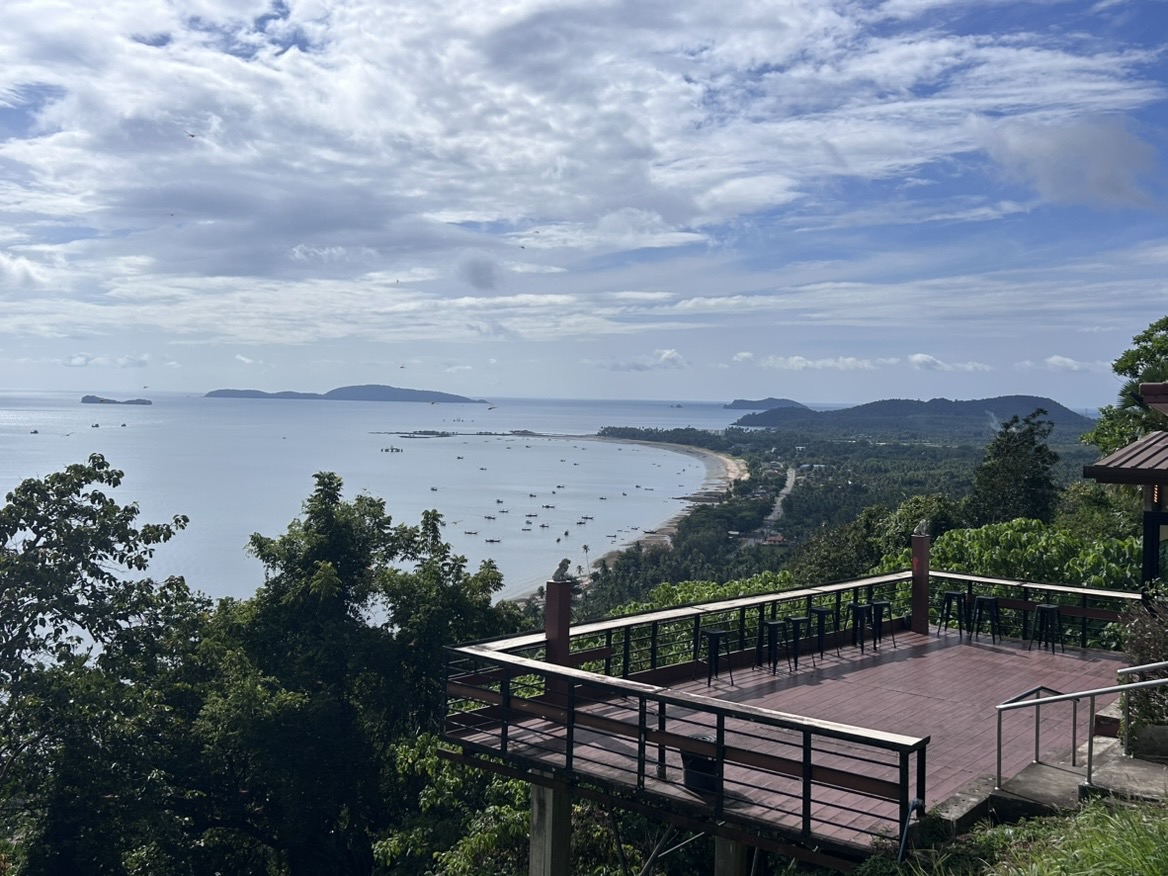
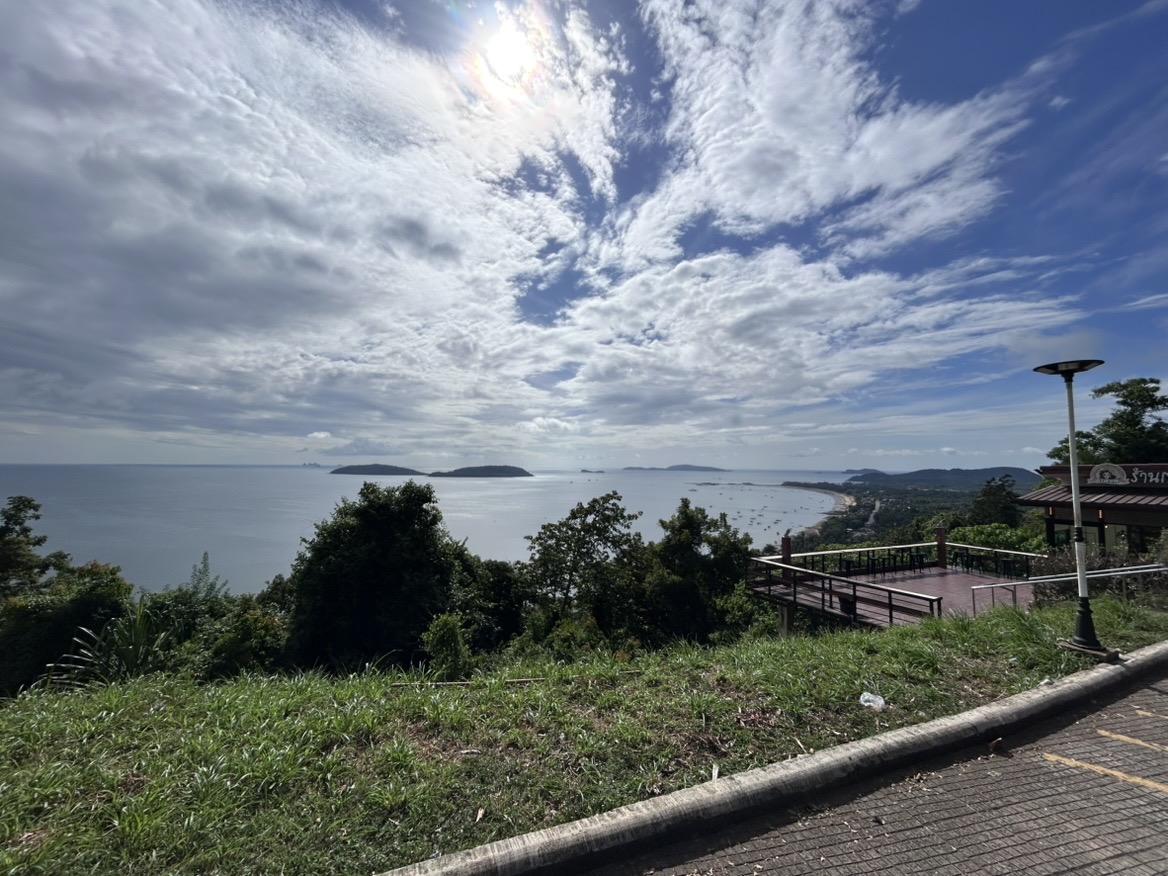
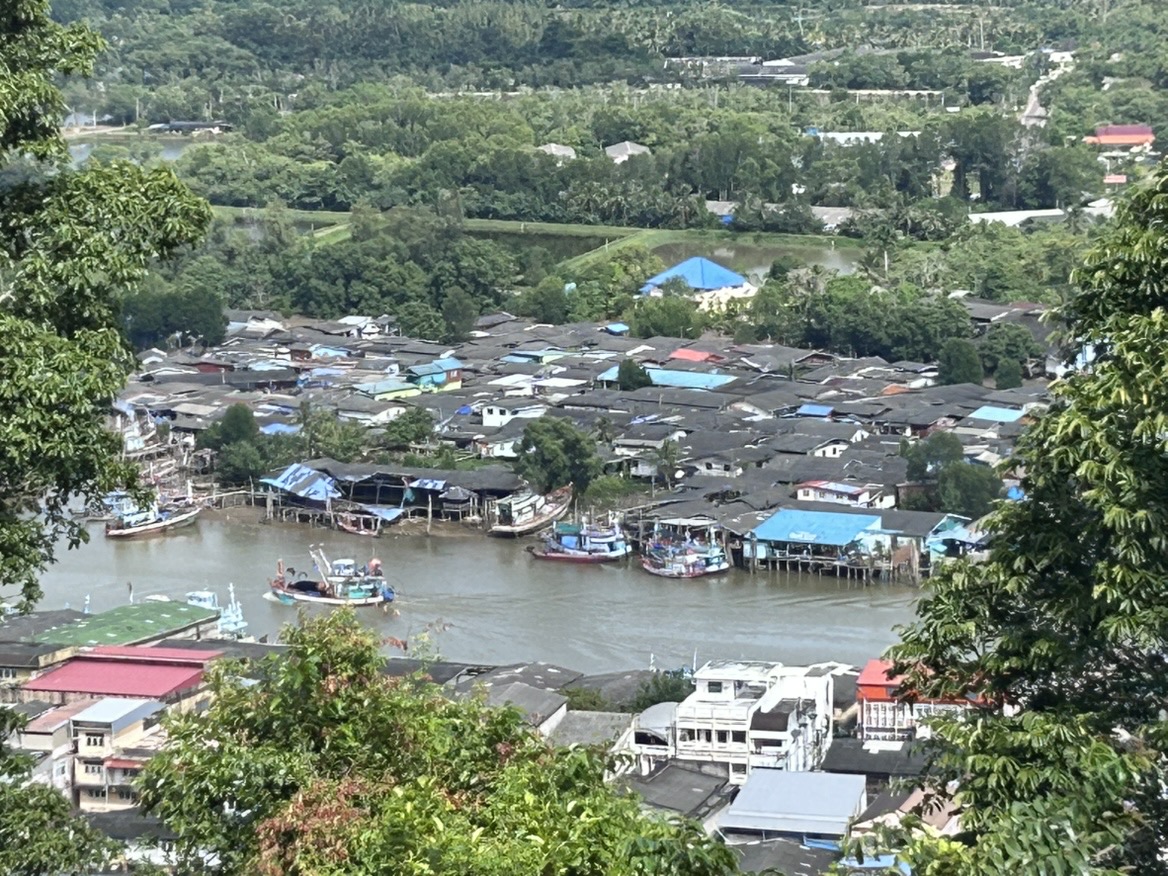
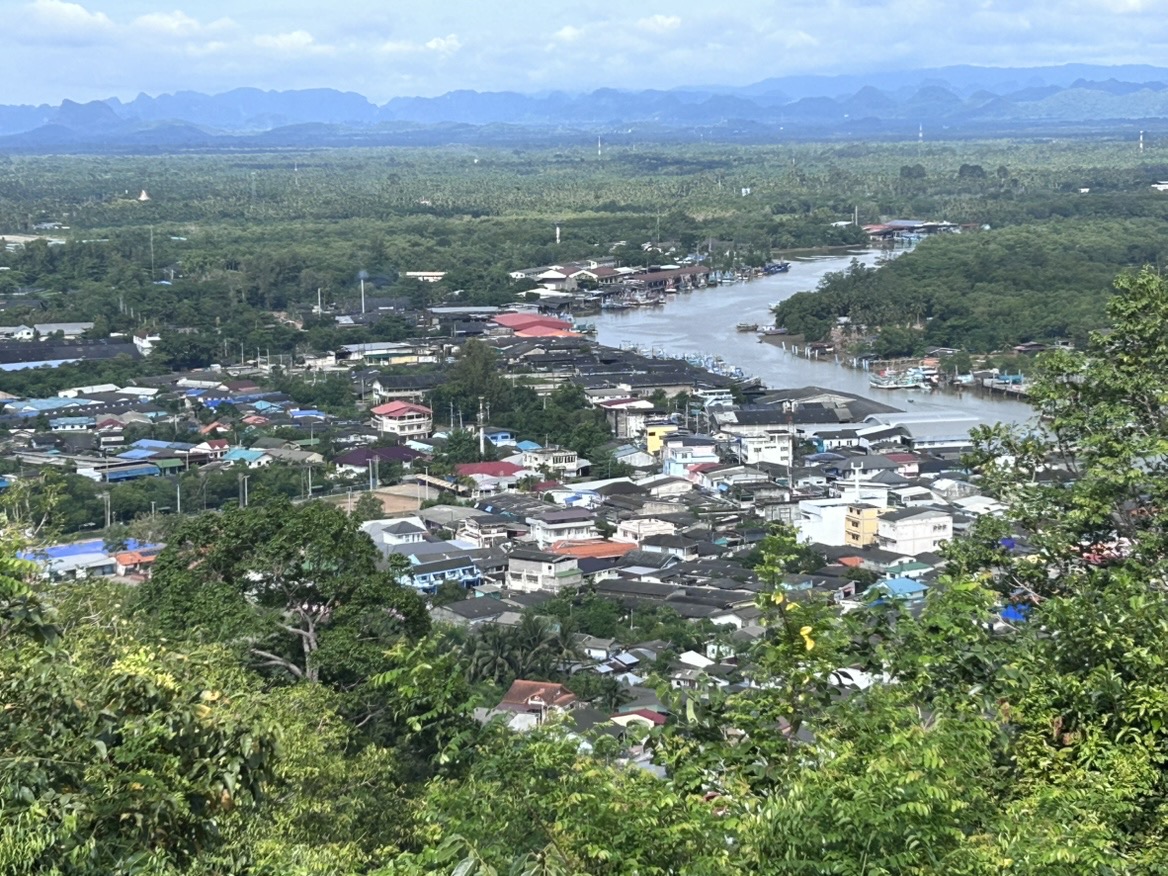
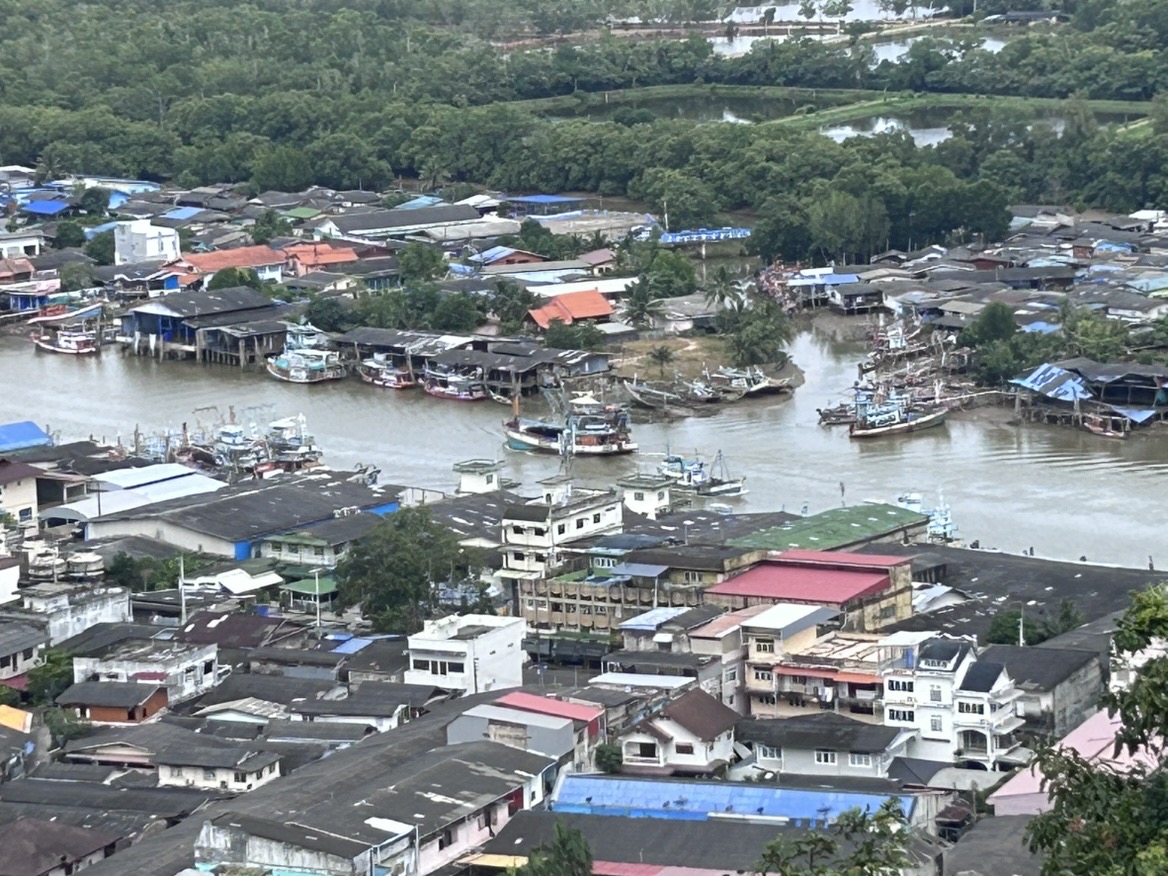
It’s a truly beautiful viewpoint. https://maps.app.goo.gl/ina9H2WeKvX1wu8L8?g_st=ic
It’s worth noting that the access road for cars climbs very steeply.
We also visited the white temple, Wat Tham Pong Pang, which is a truly extraordinary place. https://maps.app.goo.gl/vs3nr1cVPvuxGjPg8?g_st=ic
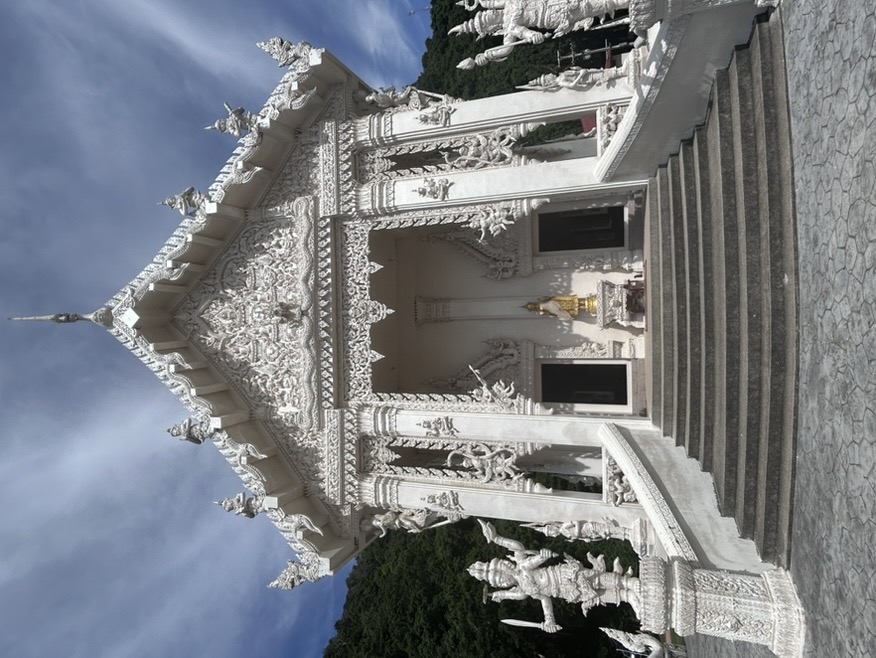
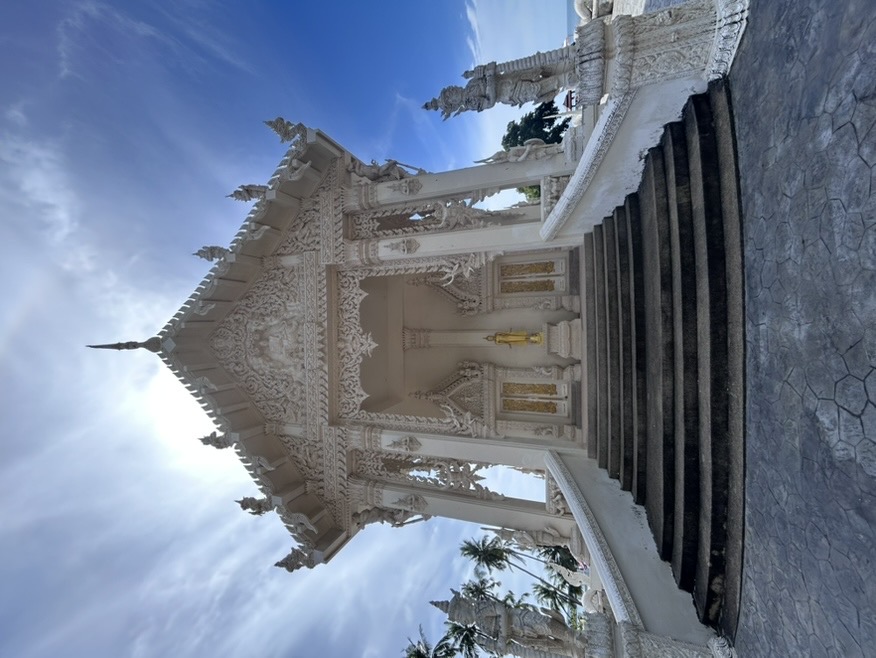
The temple itself is very beautiful because it’s all white, even though it isn’t actually that old, and the interior in particular is quite modern. 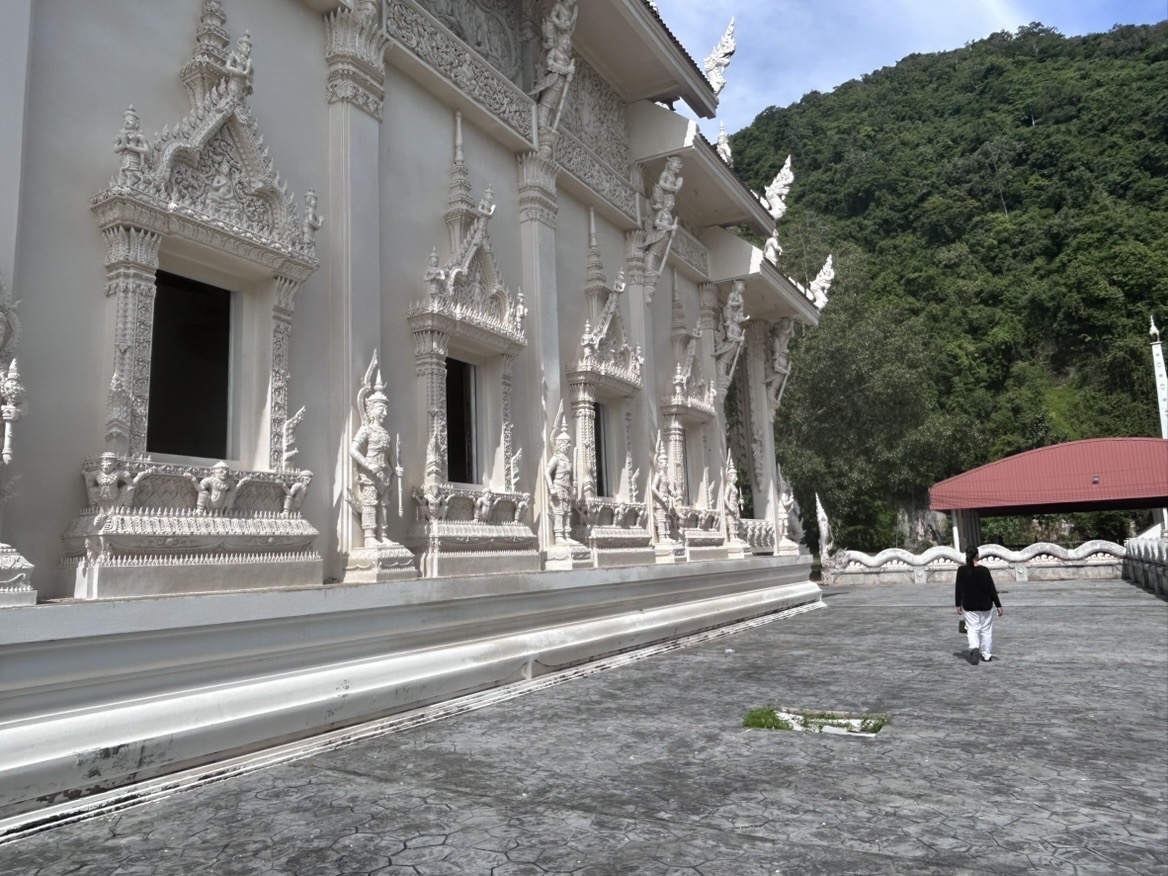 But the exterior decorations are still quite pretty. And the main attraction of this temple is really its location.
 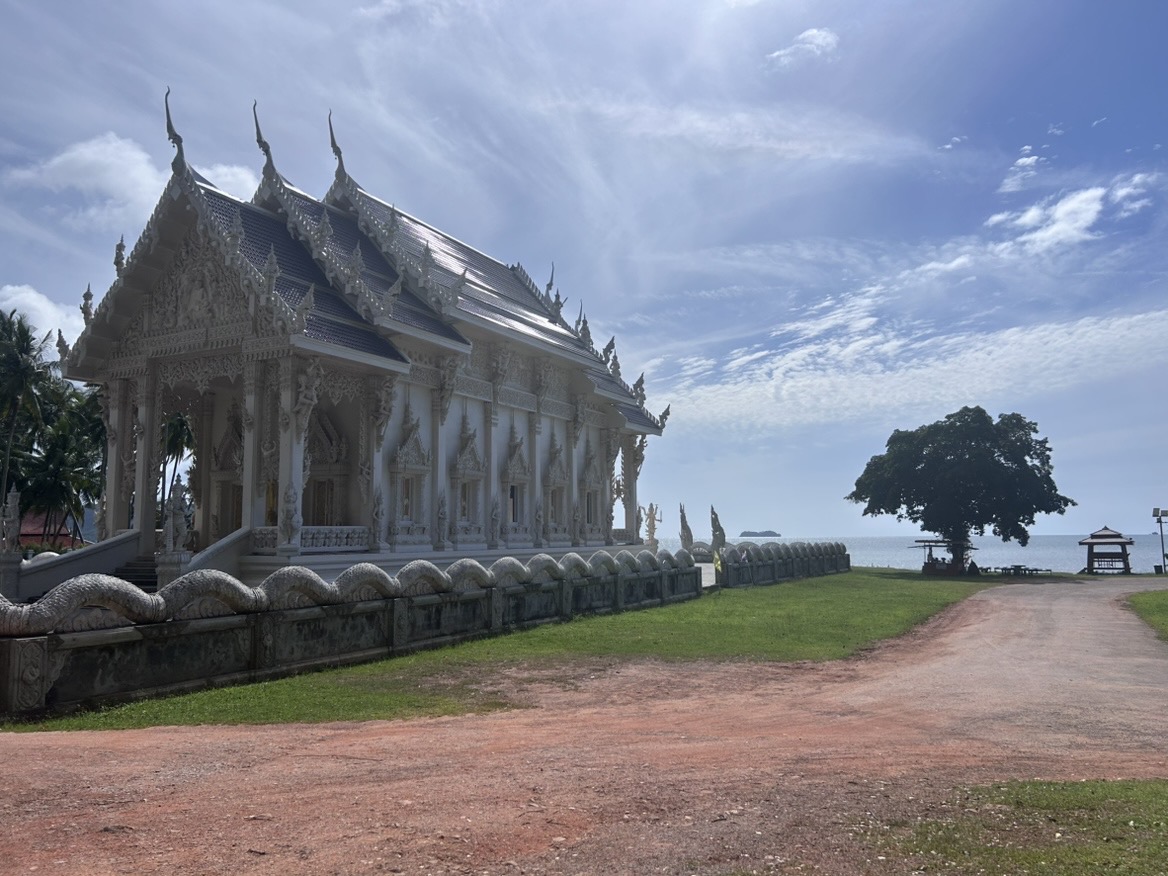 It’s set in a small cove of white sand.
 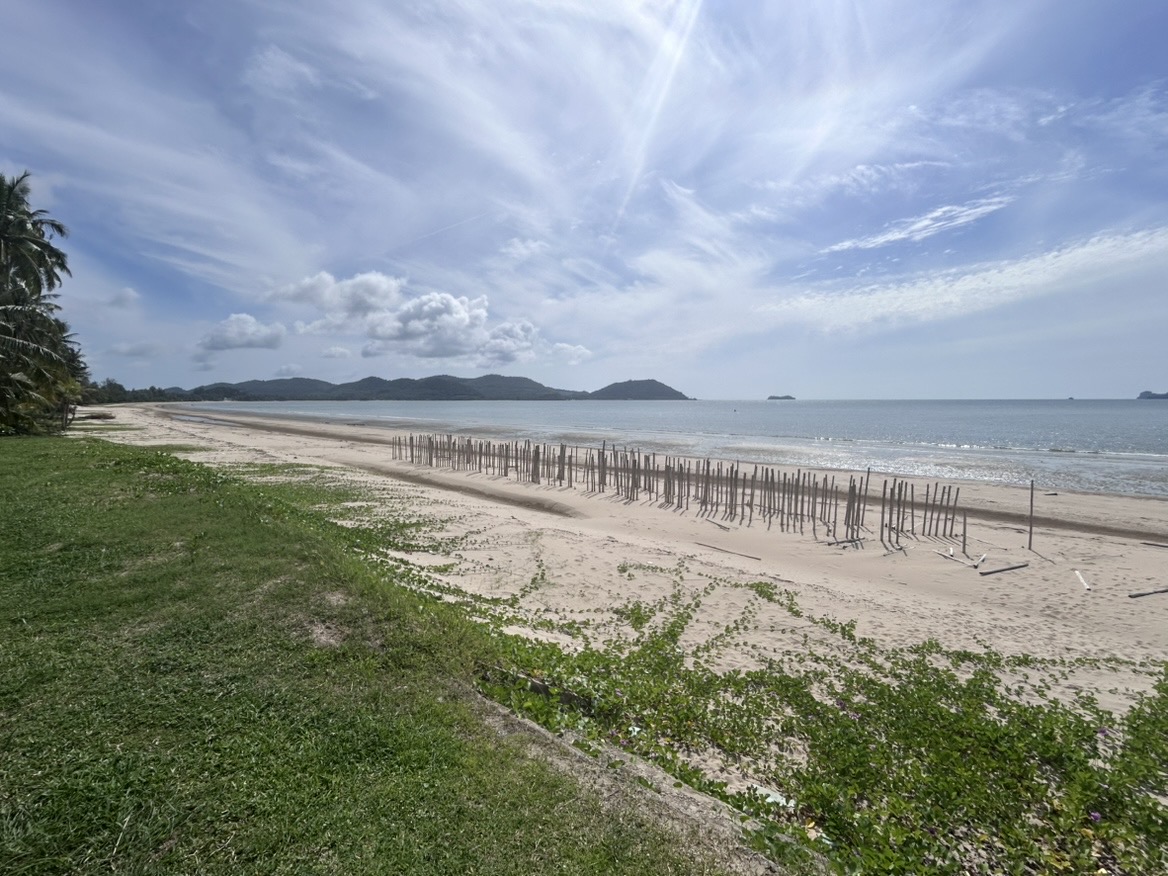 It’s absolutely a heavenly spot. And there are hardly any buildings to disturb the peace of this temple. Although, as I was leaving, I did spot a building under construction – I’m afraid it might be a small block of flats.
Don’t forget to take a look at the tree and the cave behind the temple.
I also highly recommend a visit to the small Mu Ko National Park.
https://maps.app.goo.gl/AxpHNev9fCkCDHqR7?g_st=ic
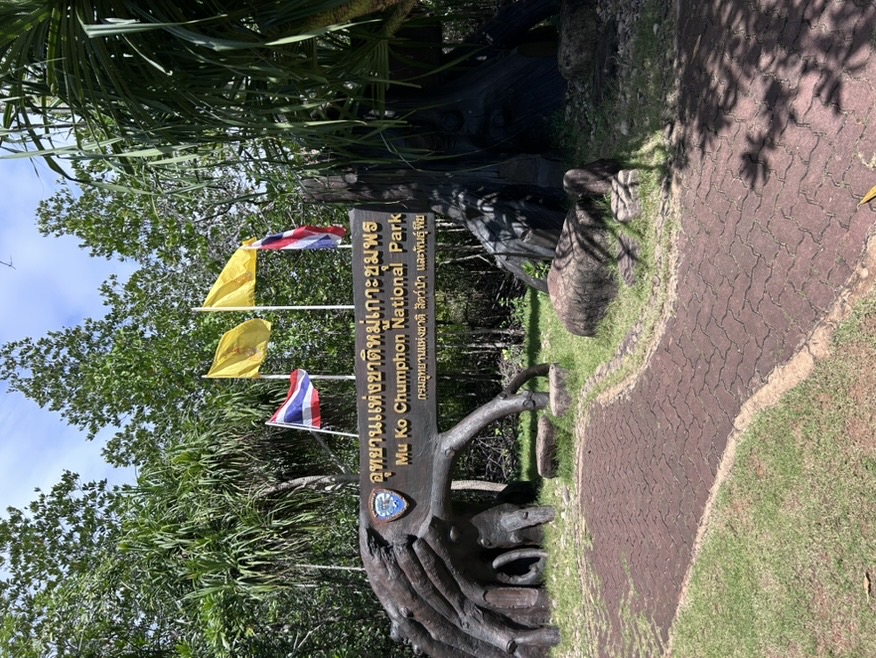
You’ll have the chance to walk along wooden footbridges through the mangrove forest. It’s a walk that takes just under an hour. 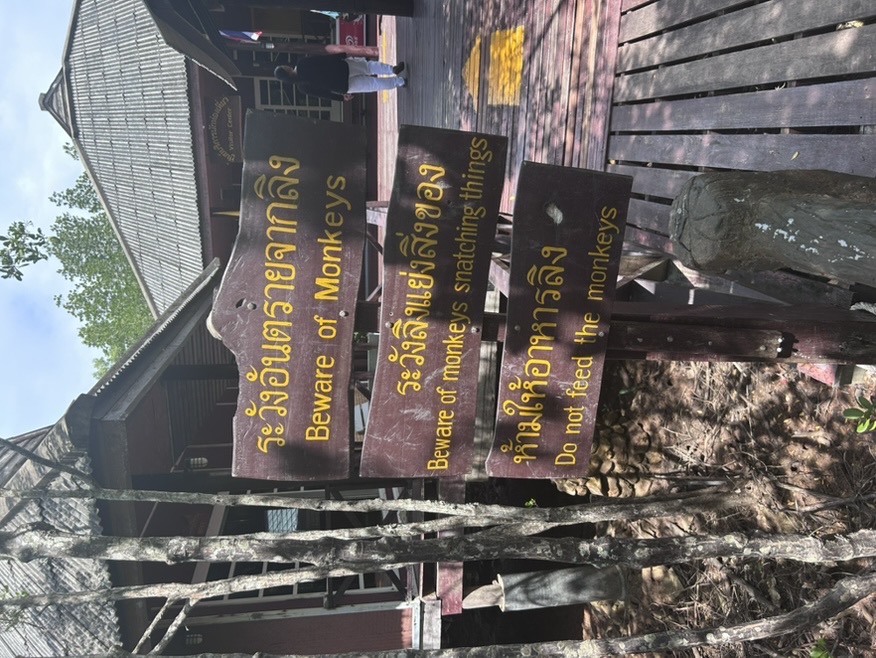
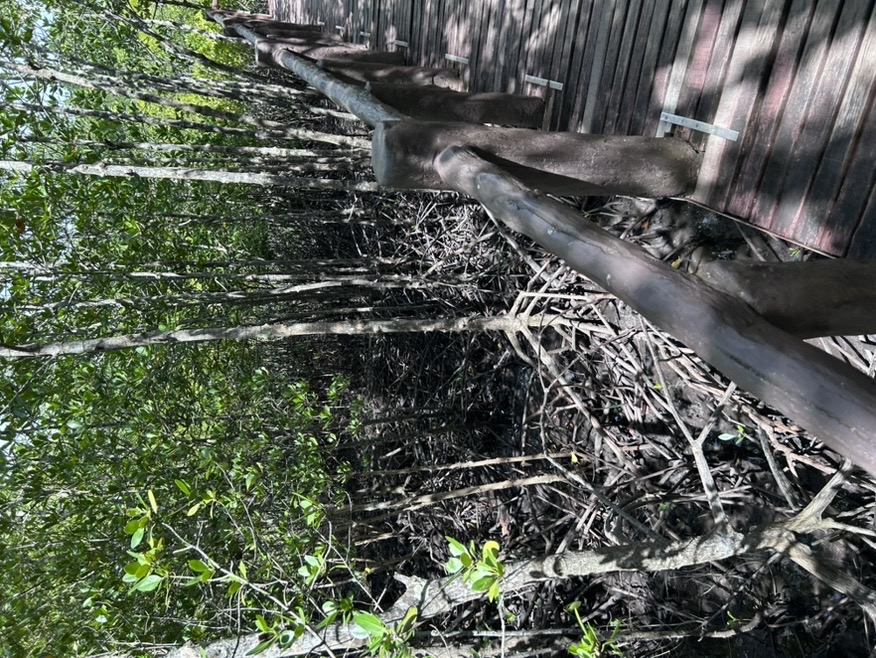

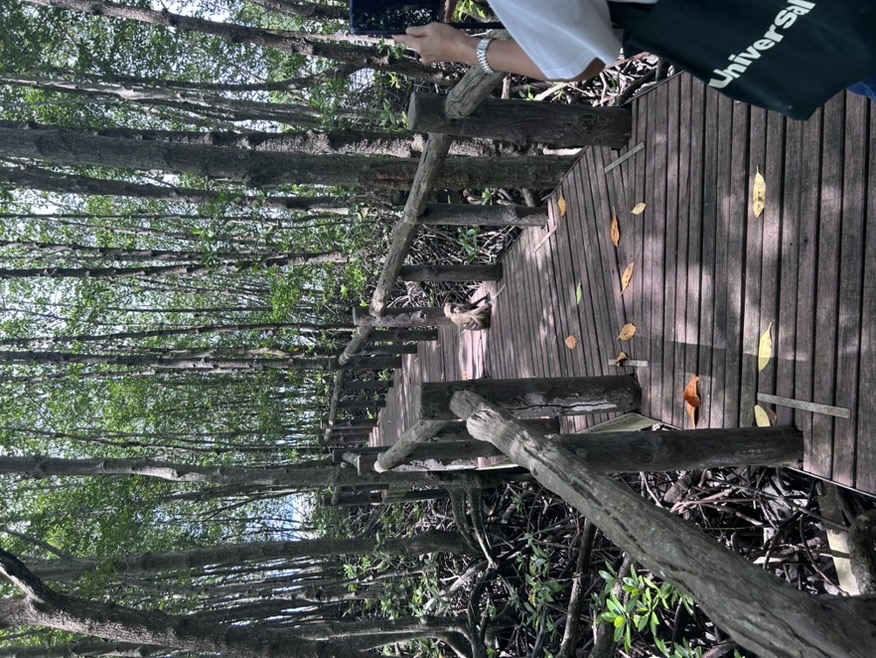
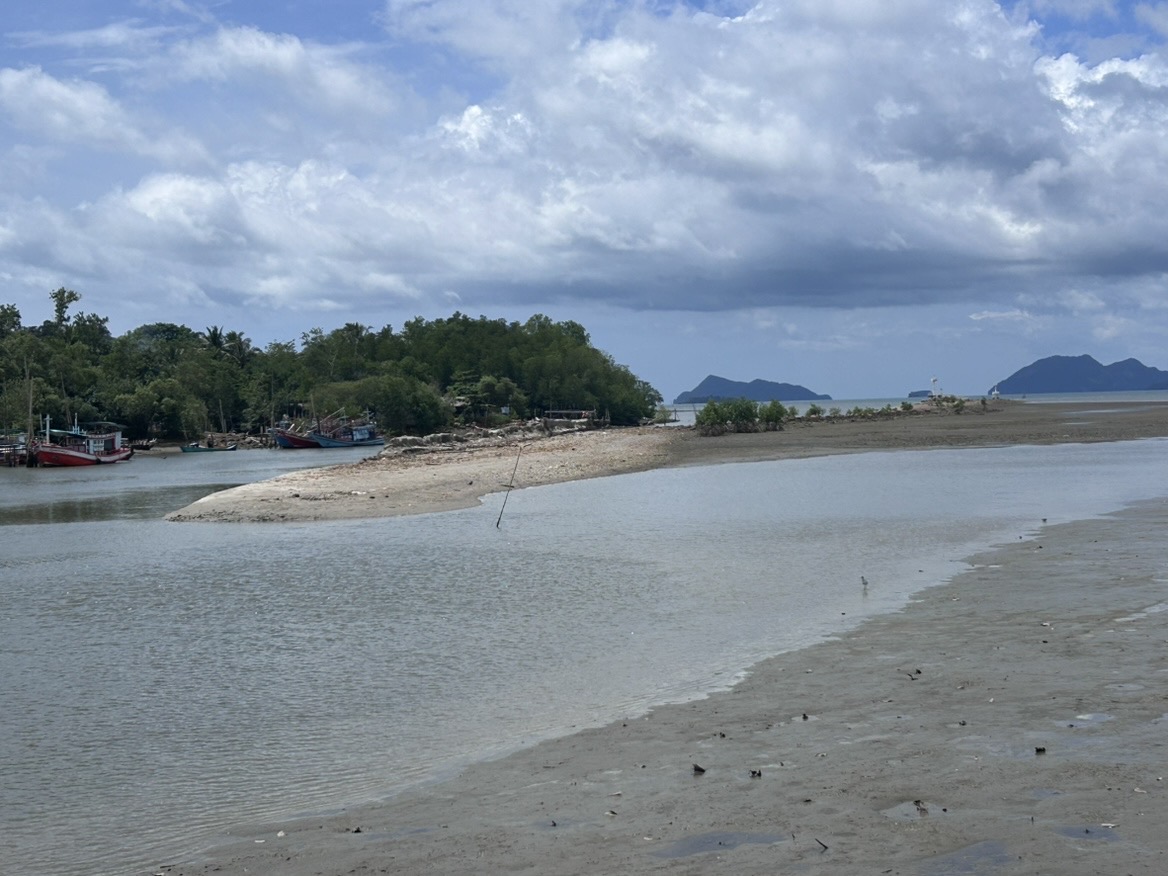
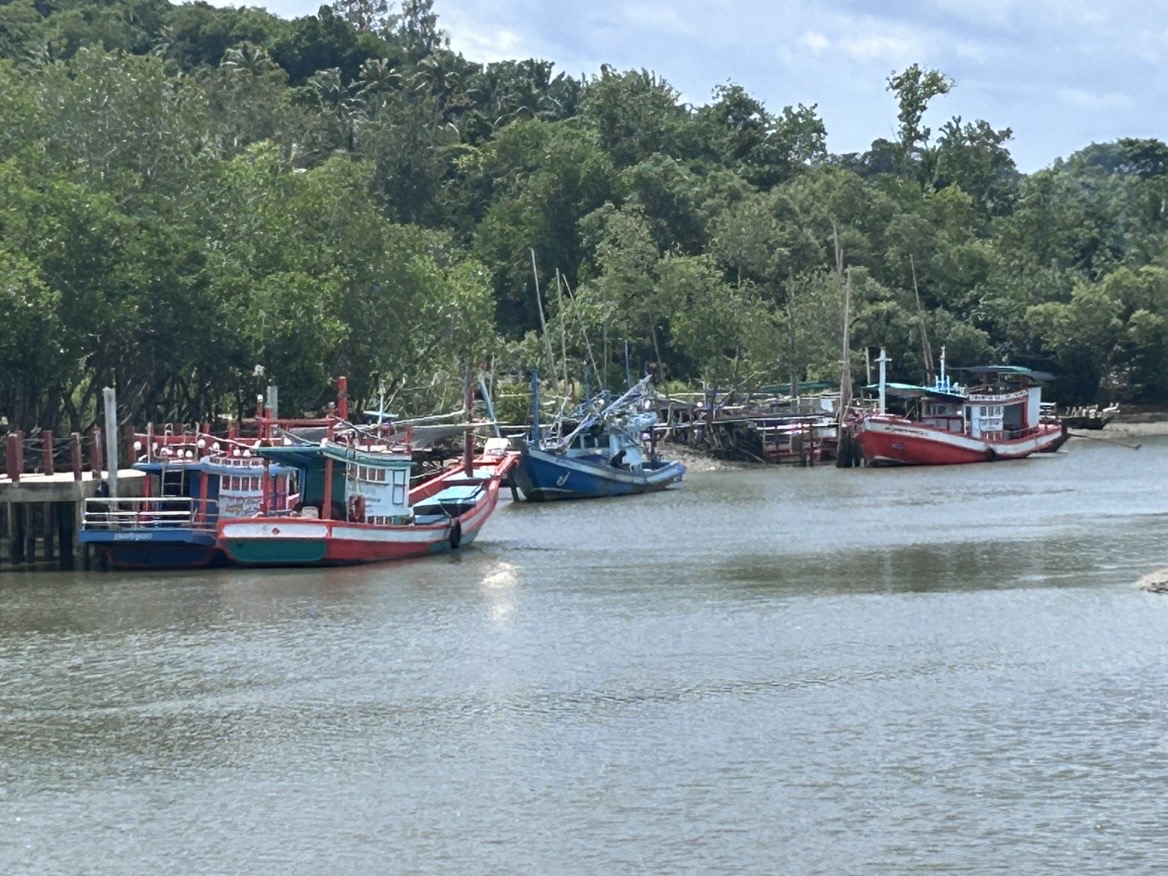
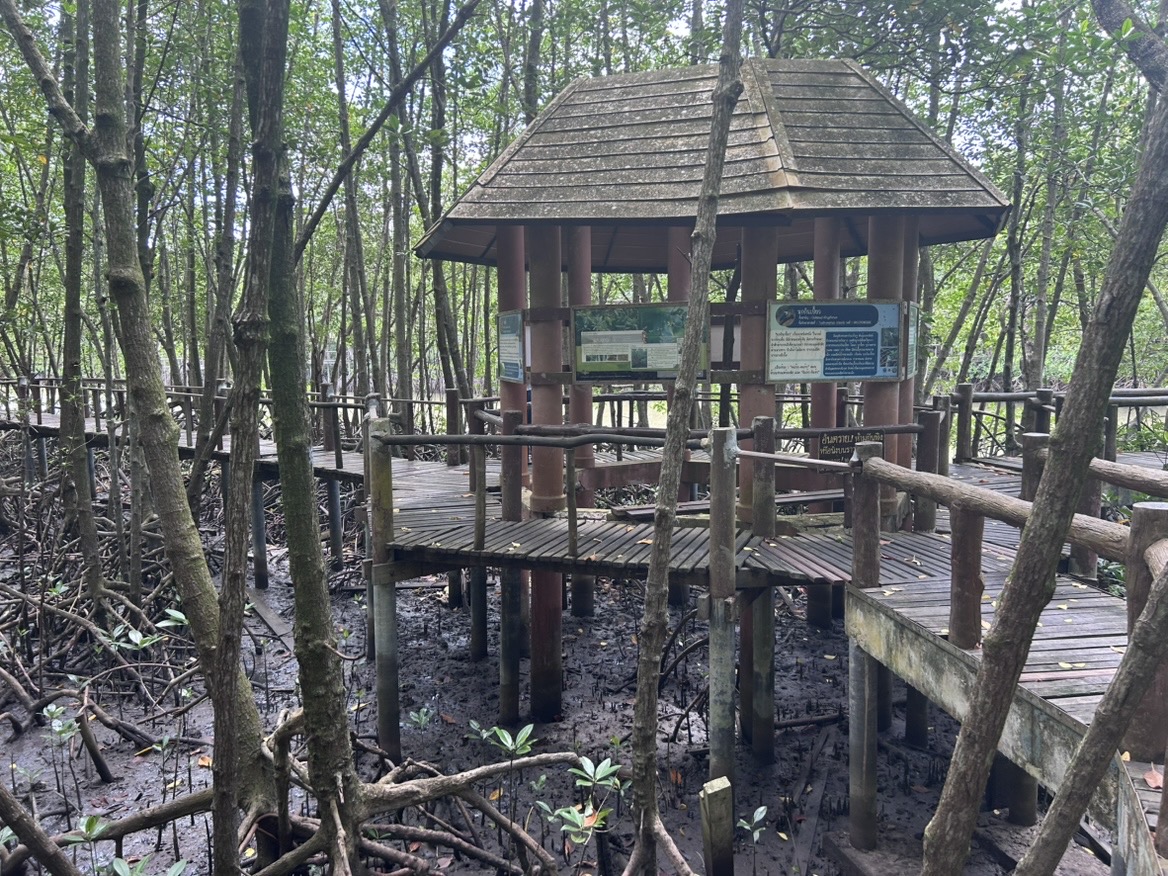 It’ It’s really fascinating to observe the unique wildlife of this mangrove in a beautiful spot at the mouth of a river that used to be known as the ‘River of Crocodiles’.
It still bears that name, but there are no longer any crocodiles. Historically, there were indeed saltwater crocodiles there.
However, there are still a few colonies of monkeys. At the park entrance, visitors are advised to be a little wary of these monkeys. And indeed, on the way back, we came across a troop of monkeys that were in the middle of a squabble.
No doubt a bit riled up by their squabble, they were slightly aggressive towards people trying to cross the footbridge. Fortunately, a park guide was there at the time, leading a school group, and she grabbed a selfie stick after a futile attempt to shoo them away by clapping her hands to scare them off. They quickly moved on and we were able to finish our walk.
Despite its great appeal, I wouldn’t really recommend this visit with very young children, unless they’re exceptionally well-behaved, because the footbridges over the mangroves aren’t particularly safe. And if a child slips out of your sight, they could easily fall off. They wouldn’t fall from very high up, but I’m not sure how you’d go about getting them back up from down there.