

You’re familiar with durian, aren’t you ? It’s the king of fruits in Thailand. 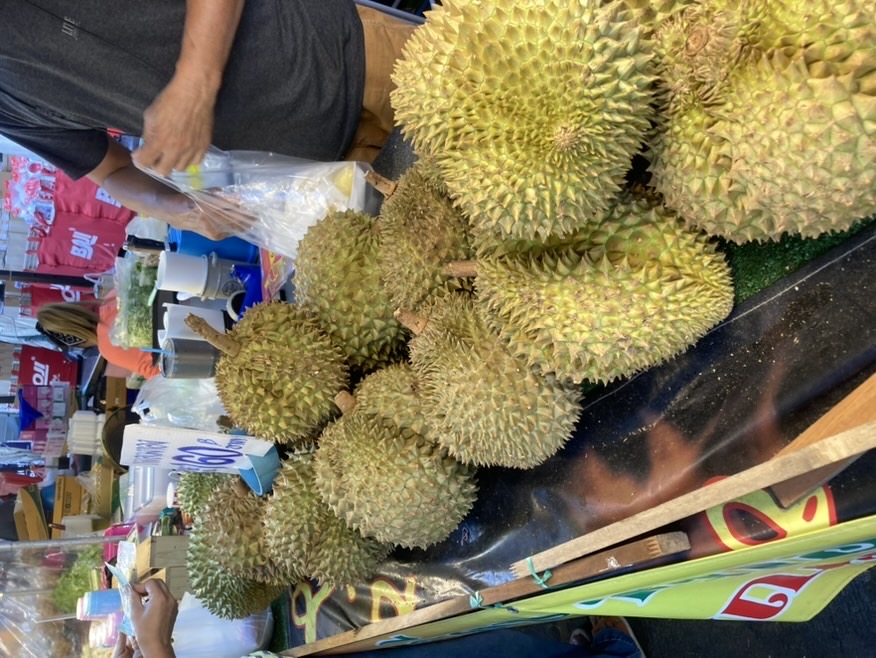
Although it’s available at the moment – it’s peak season in August – at a price low enough for all Thais to be able to buy it at least from time to time, it’s still considered a luxury item here.
The status of this fruit in Thai cuisine can be compared to that of caviar in France, white truffles in Italy, or, for example, Kobe beef in Japan.
Some varieties are, in fact, sold at extremely exorbitant prices, much like a vintage wine..
The most prestigious and expensive variety of Thai durian is the Kanyao (or Kan Yao), nicknamed the ‘grand cru’ of durians.
This rare variety is renowned for its ultra-creamy, smooth texture and subtle aroma, setting it apart from more common varieties such as the Monthong.
Often sourced from the Nonthaburi region, prices can exceed 3,000 baht (around €80–90) for the finest specimens, compared with an average of 100 to 300 baht for common varieties.
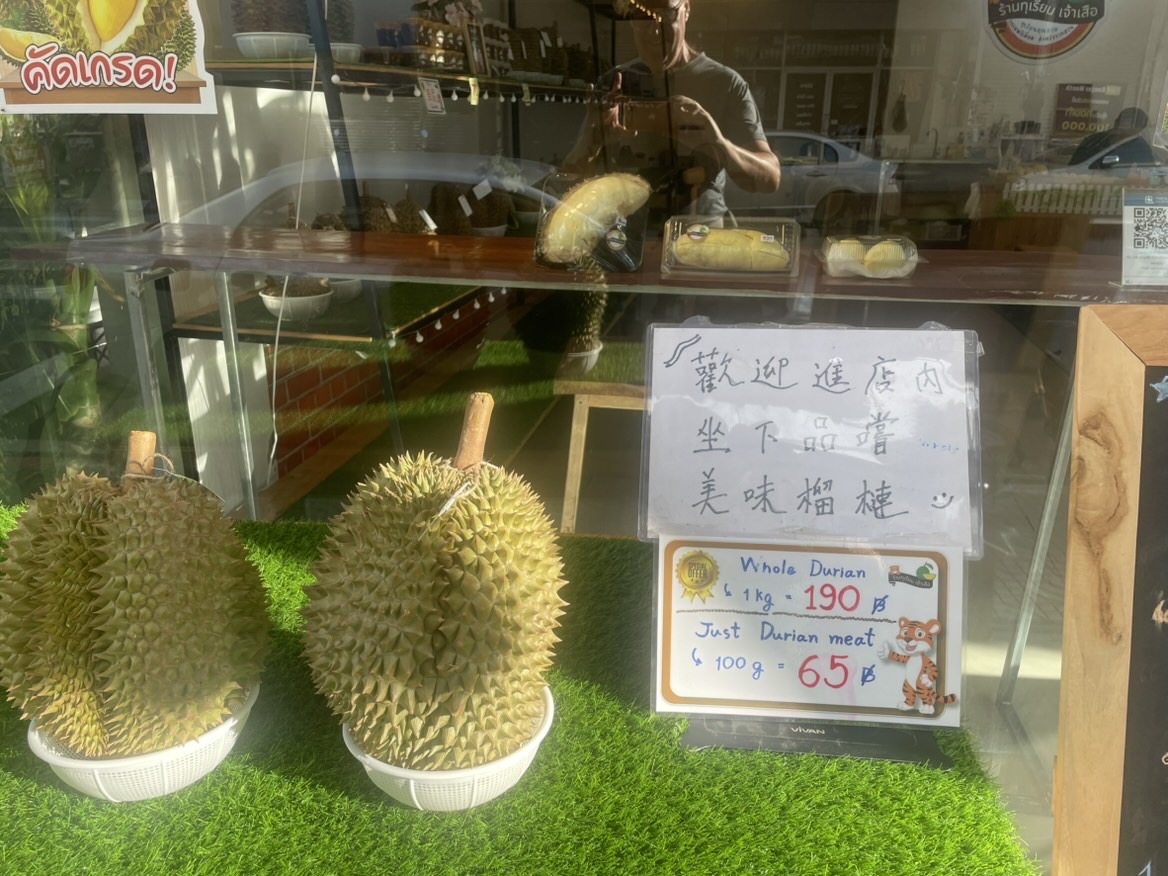
It is a luxury fruit, often reserved for connoisseurs and specialist festivals, unlike the Monthong, which is the affordable entry-level variety and is widely exported.
It is considered good form to offer this particular variety on the occasion of a major event, such as a wedding ceremony, for example.
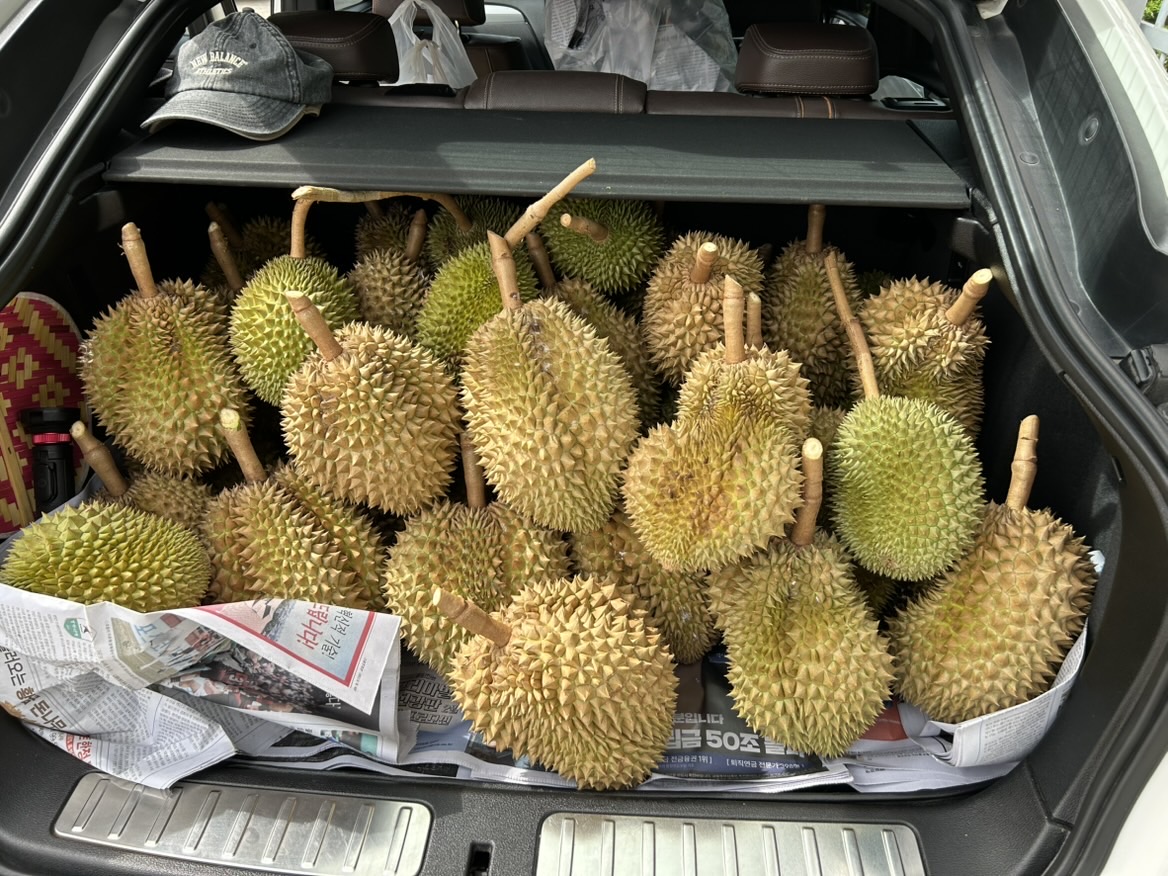
The durian is not so easy to enjoy. First of all, it puts up a fight with its strong, distinctive smell. Let’s be clear : the durian literally stinks. Even the strongest French cheeses can’t hold a candle to it !
In fact, durians are banned on public transport. It is strictly forbidden to carry durians on aeroplanes, trains or the underground. At the entrances to MRT stations in Bangkok, a specific sign reminds passengers of this strict ban.
Secondly, the durian’s shell makes it very difficult to handle ; its spines are formidable and mean you have to wear gloves when handling it.
Finally, to get to the fruit, you need a solid technique for cutting open the shell. The vendors have the knack, but it’s not easy. 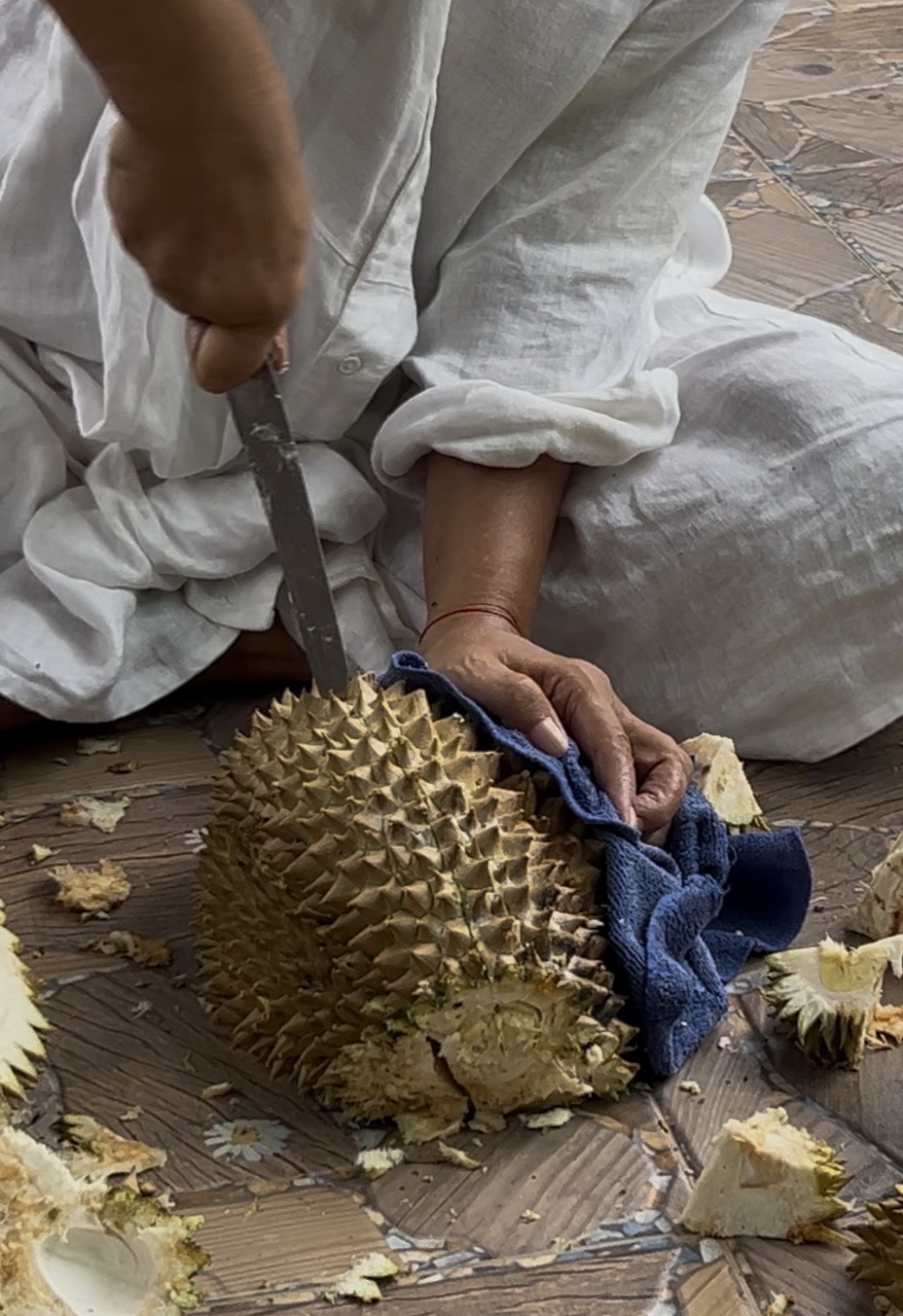
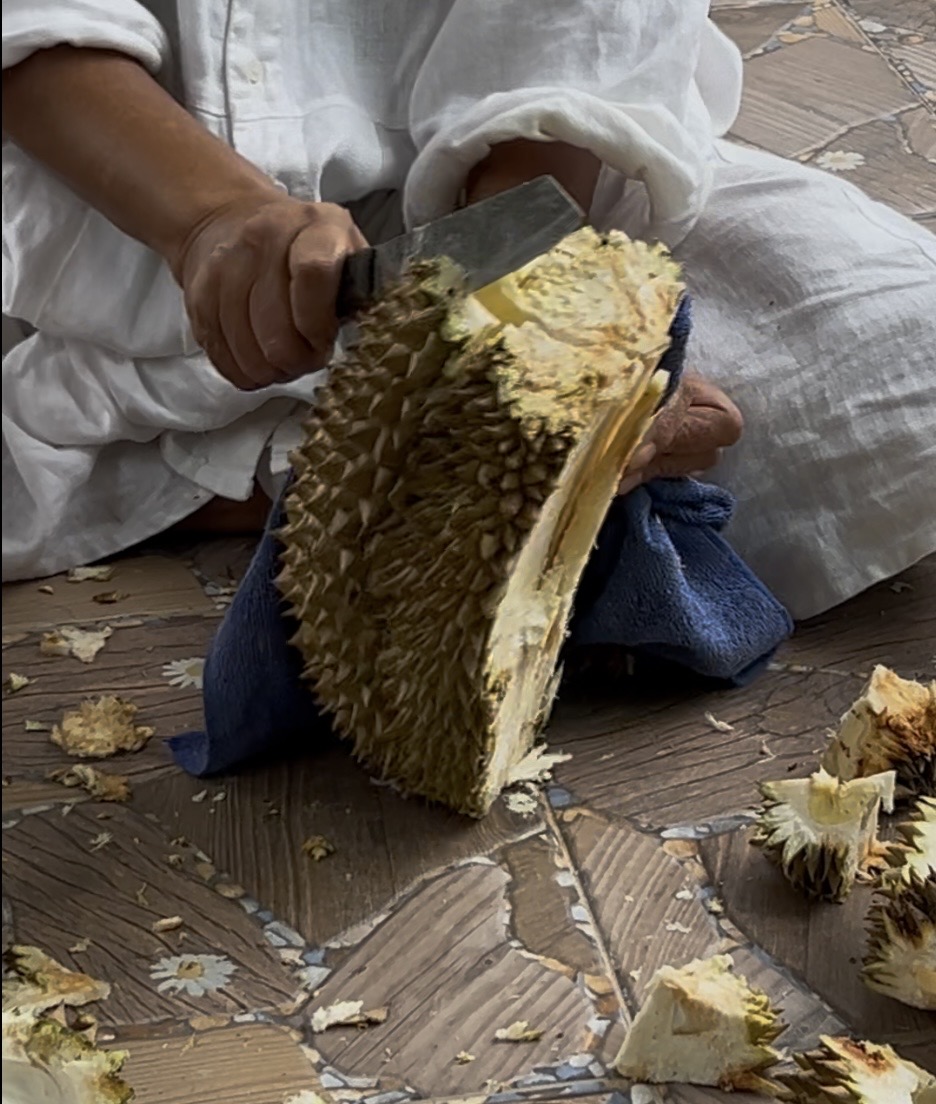
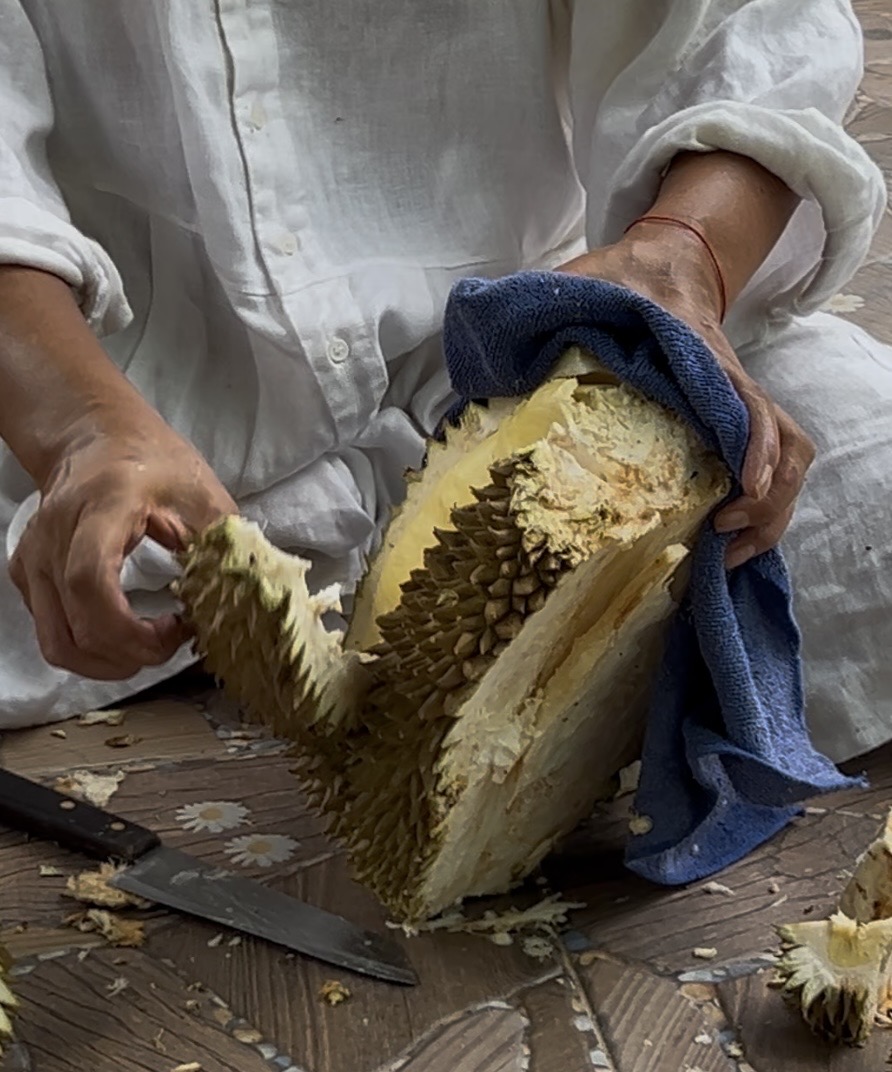
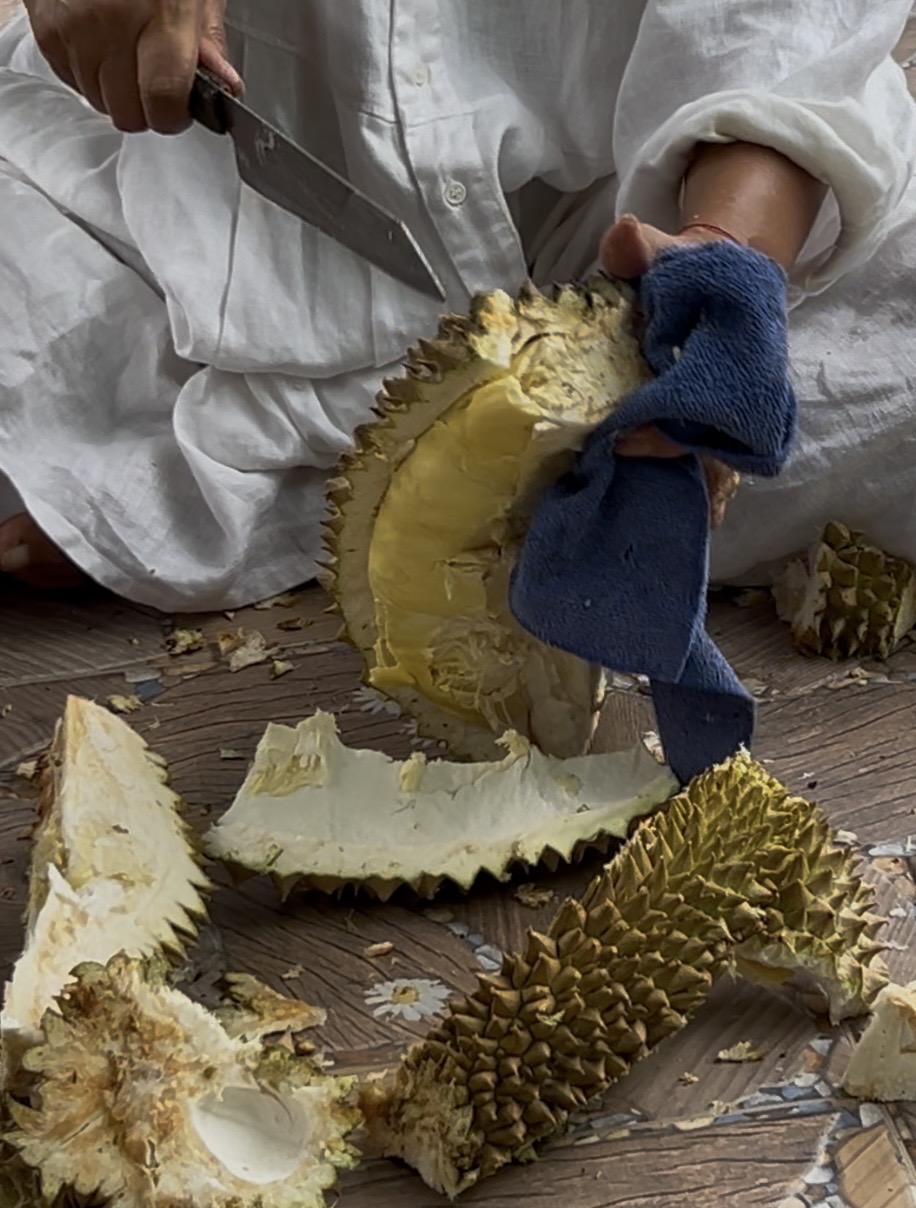
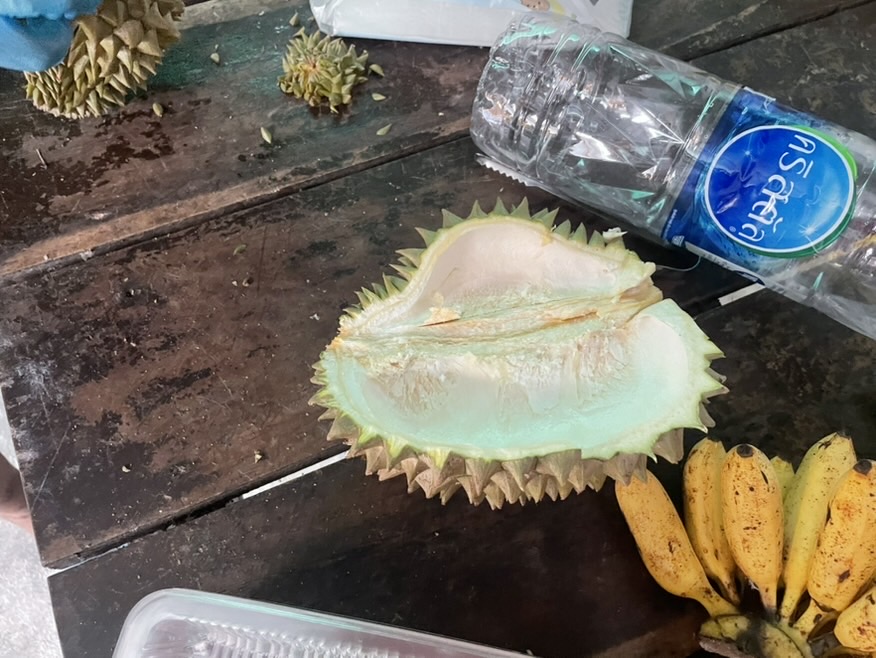
Choosing a good durian isn’t exactly easy either. The flesh should be firm but not mushy. Sellers try to gauge its texture by tapping the shell with a small wooden tool, which produces a different sound depending on the condition of the fruit inside. But buyers often ask for a small cut to be made so they can feel the flesh of the fruit.
So do I enjoy this fruit that’s such a favourite with the Thais ?
To be honest, not really. I found it hard to get used to the very distinctive texture and taste. I always eat some when it’s offered to me, so as not to offend, but I only eat a small piece – I quickly get sick of it.
If a Thai person offers you some, do make the effort to have at least a little ; it will be much appreciated.