

In this long article, I’ll try to answer the question posed in the title : do you have to be mad to dare to ride a motorbike in Thailand ?
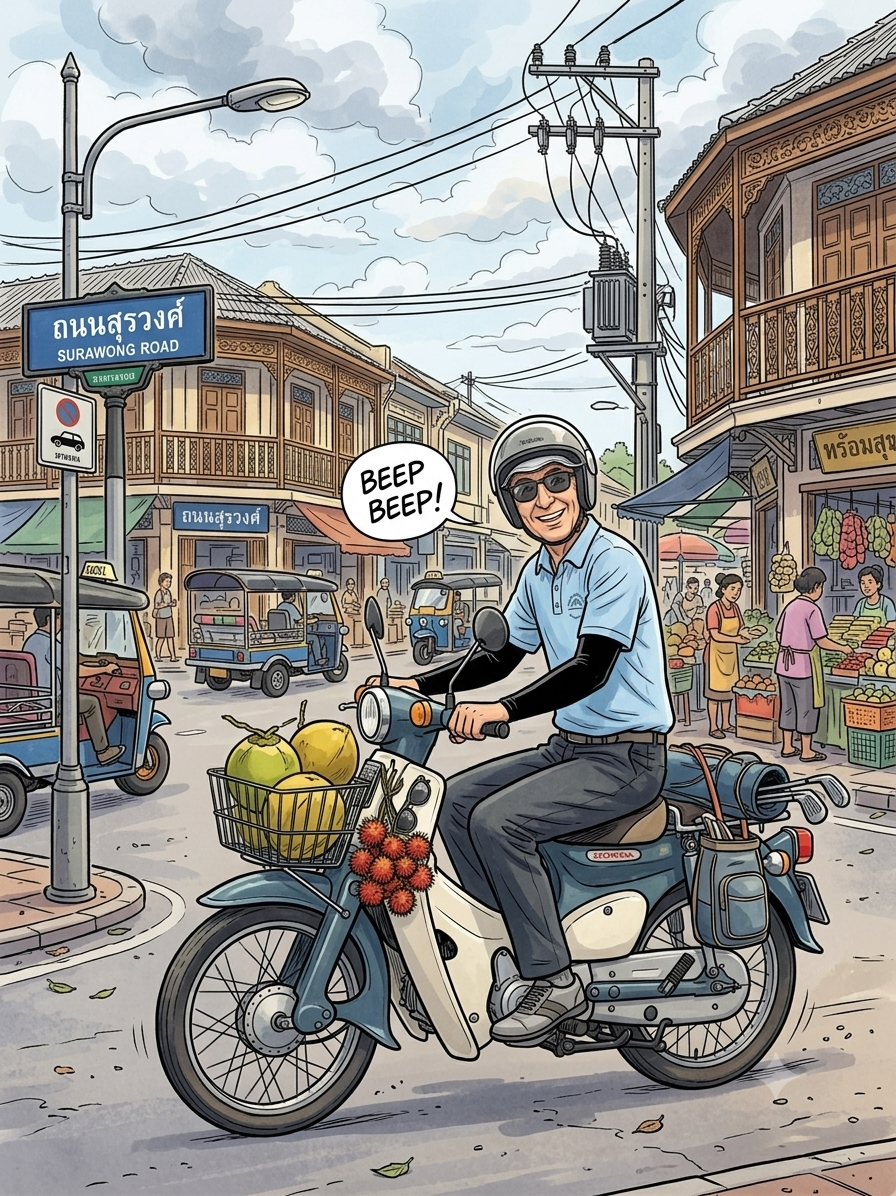
I’ve been living in Hua Hin for three years now and ride a 150cc scooter every day, mainly for getting about town but sometimes also for trips on the open road within a one-hour radius of the town. I’ve also hired a scooter on several occasions whilst visiting other regions, as well as Laos and Cambodia.
I’ve held a car licence for 48 years and a motorbike licence for 30 years ; I’ve never had an accident, never fallen off a motorbike, never hit another car or an obstacle – not even a scratch. And I realise how lucky I am.
Let’s first analyse some statistical data to assess the risks here.
The figures
| Indicator | France | Thailand |
|---|---|---|
| Area | 551,700 km² | 513,100 km² |
| Population | 68 million | 72 million |
| Average age | 42.7 years | 41.9 years |
| Number of cars | 39 million | 20 million |
| Number of motorised two-wheelers | 4 million | 22–23 million |
| Number of accidents per year | 55,000 accidents resulting in injury | 15,000–17,000 (serious) |
| Number of fatalities per year | 3,200–3,500 | 18,000–20,000 |
| Number of injuries per year | 240,000 | 850,000–950,000 |
It should be noted that in Thailand only major accidents are recorded ; I have been unable to find figures for the actual number of accidents, which is obviously much higher.
These figures clearly show that there is a much greater risk of being killed or injured in Thailand than in France, but let us look beyond the raw data.
- It is not solely a question of infrastructure
- It is not simply that “Thais are bad drivers” (a simplistic… and false view)
- The explanations are more complex and varied
Infrastructure
Viewed from a European country, especially if you’ve never set foot in Asia, you might imagine that Thailand is a relatively underdeveloped country, particularly in terms of road infrastructure.
That is not at all the reality you’ll find here
There is a motorway network and a network of major roads that are in excellent condition. Most of the time, these roads are concrete rather than tarmac, which isn’t a bad thing given the heat.
There can indeed be minor issues on the road, such as poorly repaired potholes, but these are mainly found on small secondary roads and do not seem to pose the greatest danger.
However, in towns – especially after heavy rain – road repairs can sometimes deteriorate very quickly. You might drive over a tar patch in good condition one day, only to find a large hole in its place the next. This is particularly true as many concrete roads are repaired with tar, which doesn’t hold up very well.
I’ll come back to the dangers of the road later…
The Highway Code
Some farangs
farang
farangs
« farang » est un terme générique désignant les Occidentaux blancs, principalement utilisé en Thaïlande et au Laos. Le mot a des origines persanes, provenant du mot « Francs » et s’est répandu pour désigner les Européens occidentaux.
seem to think there’s no Highway Code in Thailand – that’s not true. There is a Highway Code which is probably almost as detailed as the French one. I haven’t been able to find a copy in English, let alone in French. However, I did find a book explaining the Highway Code and driving in Thailand in layman’s terms ; it’s written in English, available in all Asia Books shops, and I highly recommend it to anyone wishing to drive in Thailand.

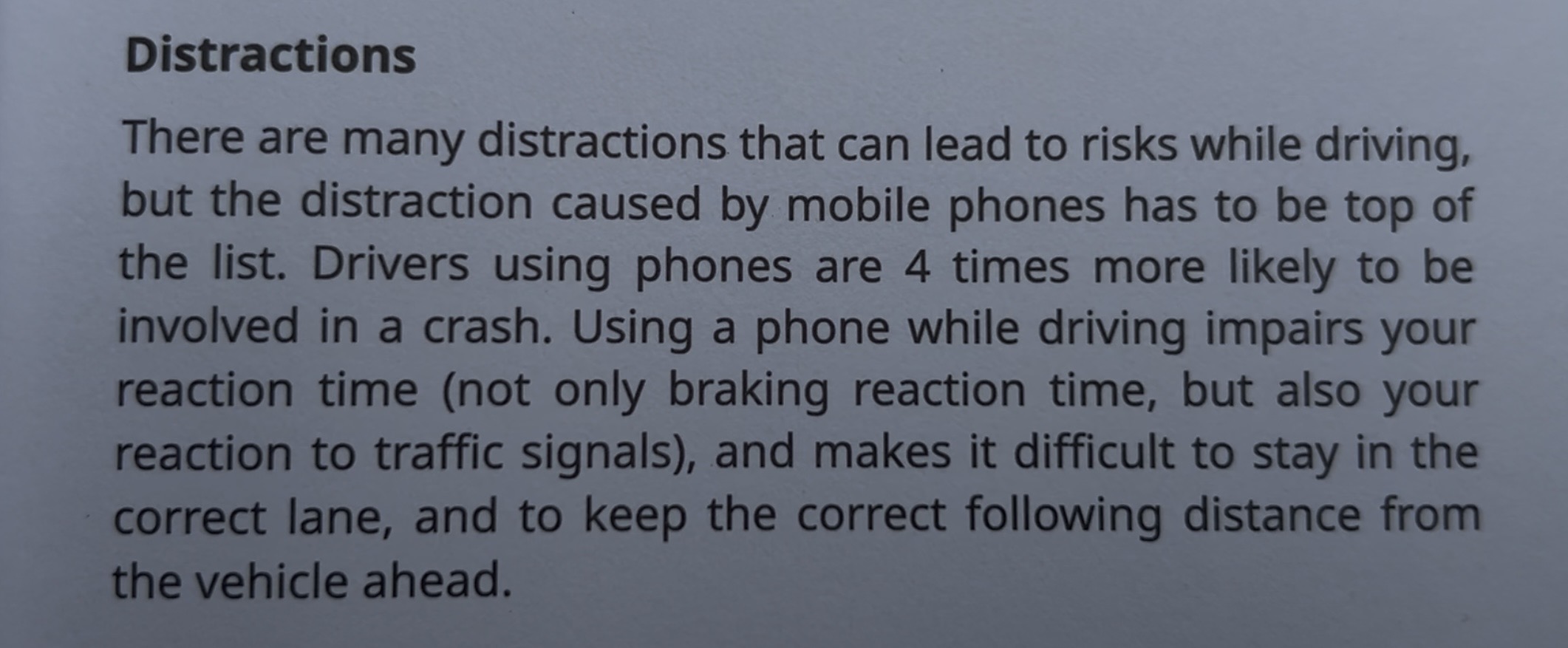
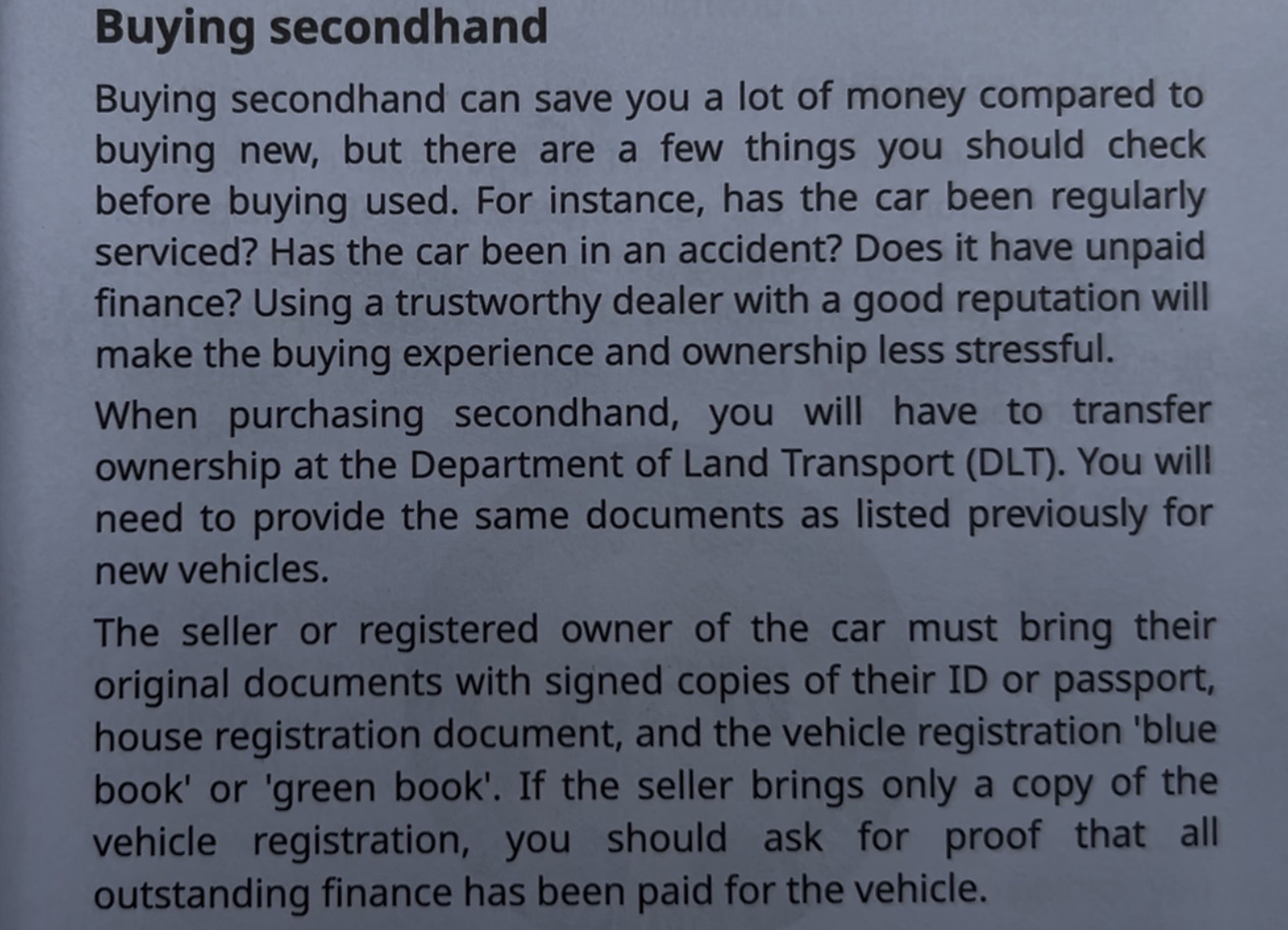
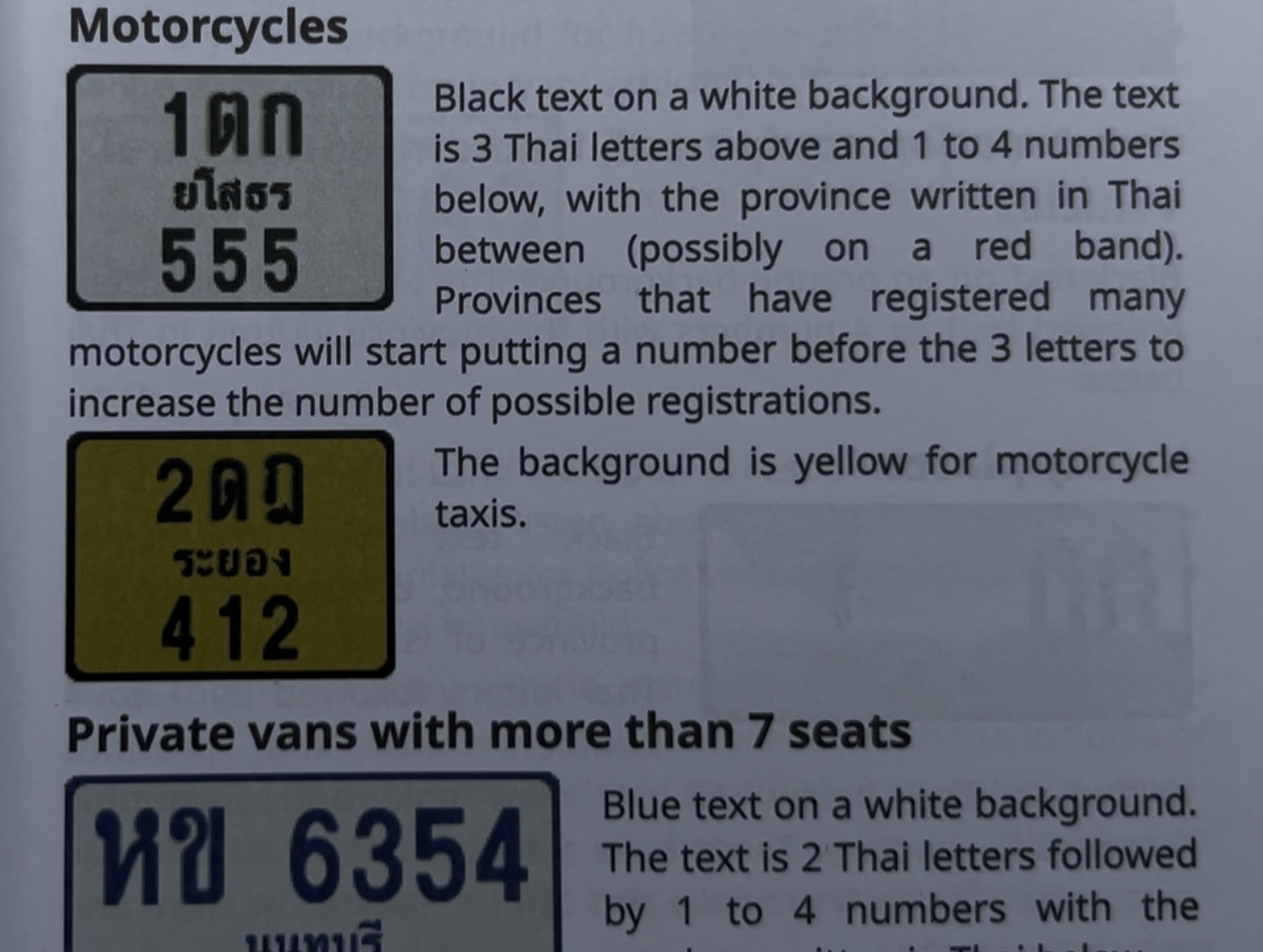
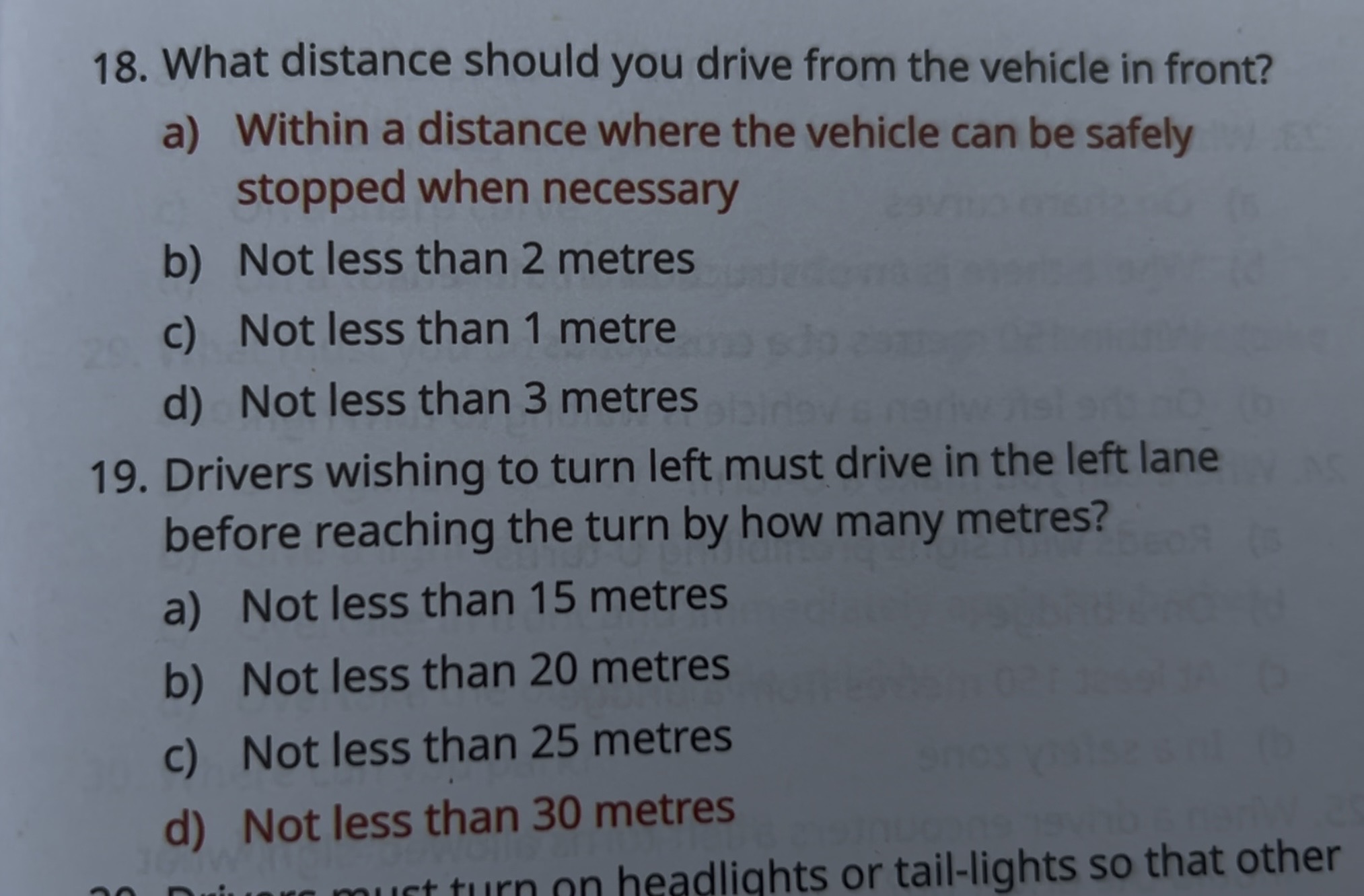
Here’s an example of what you can find in this book.



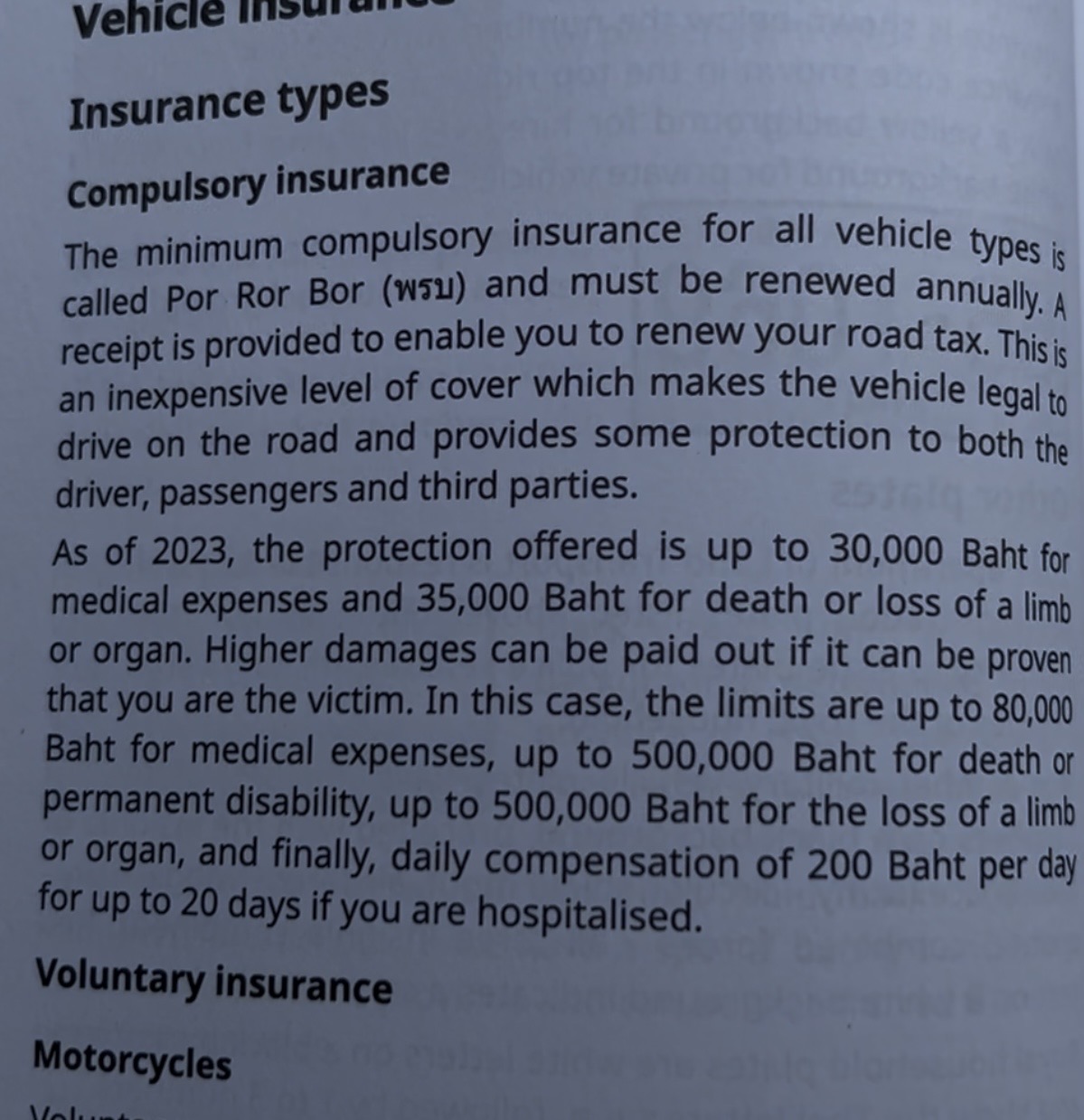
Compulsory insurance covers almost nothing, yet it is very cheap.
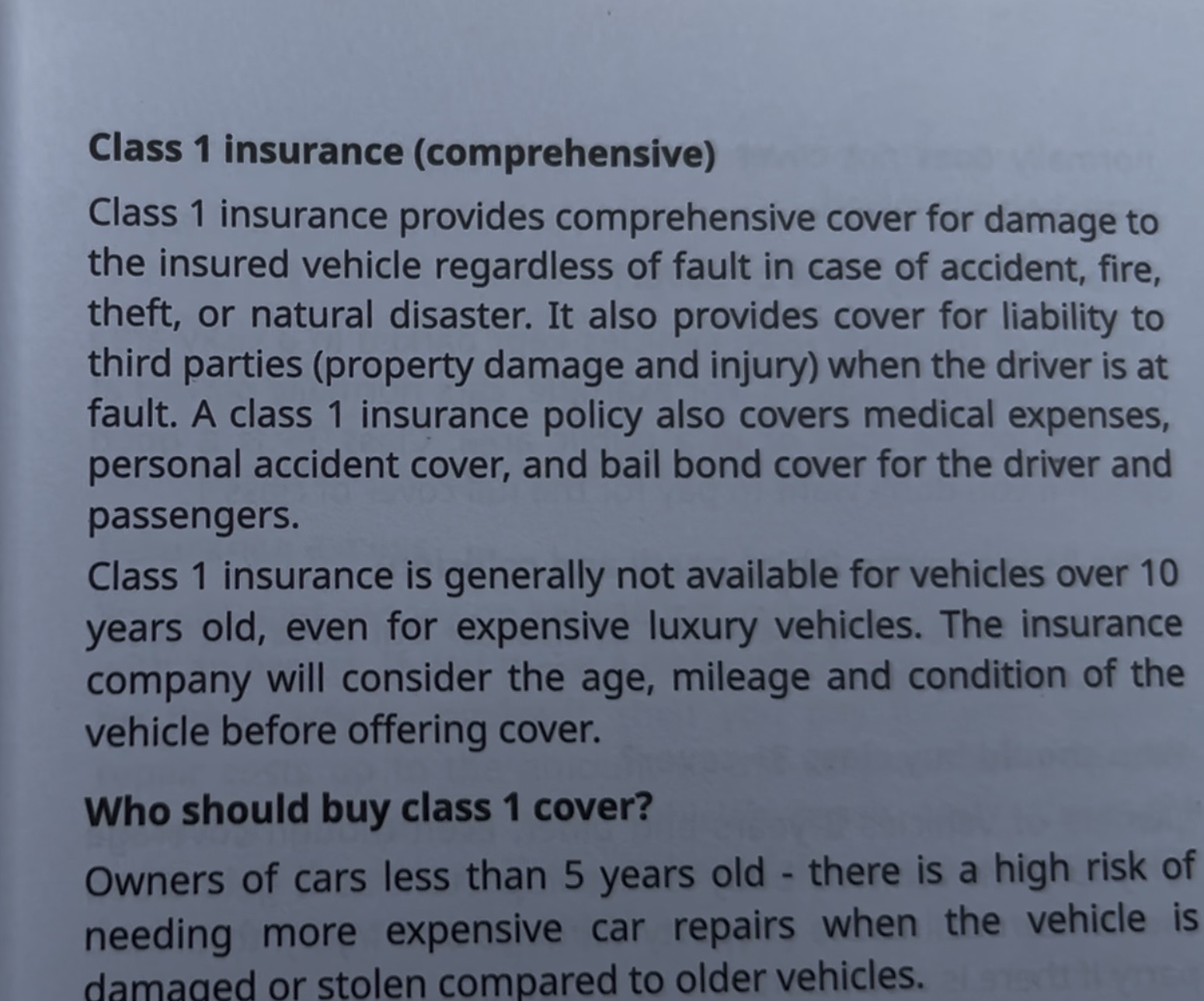
This is extremely important.
Why ?
Because in the event of an accident involving another vehicle – whether a car or a motorbike – or a pedestrian, whatever the circumstances of the accident, you will almost always be deemed to be at fault. When it comes down to the word of a farang
farang
farangs
« farang » est un terme générique désignant les Occidentaux blancs, principalement utilisé en Thaïlande et au Laos. Le mot a des origines persanes, provenant du mot « Francs » et s’est répandu pour désigner les Européens occidentaux.
versus that of a Thai person – who will find eyewitnesses even if there was no one at the scene – it will be almost impossible to avoid paying. Assuming you can access CCTV footage, you might be able to prove that you are not ENTIRELY at fault. But in any case, the repair and hospital costs are very likely to be borne by the farang
farang
farangs
« farang » est un terme générique désignant les Occidentaux blancs, principalement utilisé en Thaïlande et au Laos. Le mot a des origines persanes, provenant du mot « Francs » et s’est répandu pour désigner les Européens occidentaux.
. It is therefore ESSENTIAL to choose Class 1 insurance and not to rely solely on the compulsory Por Ror Bor insurance.
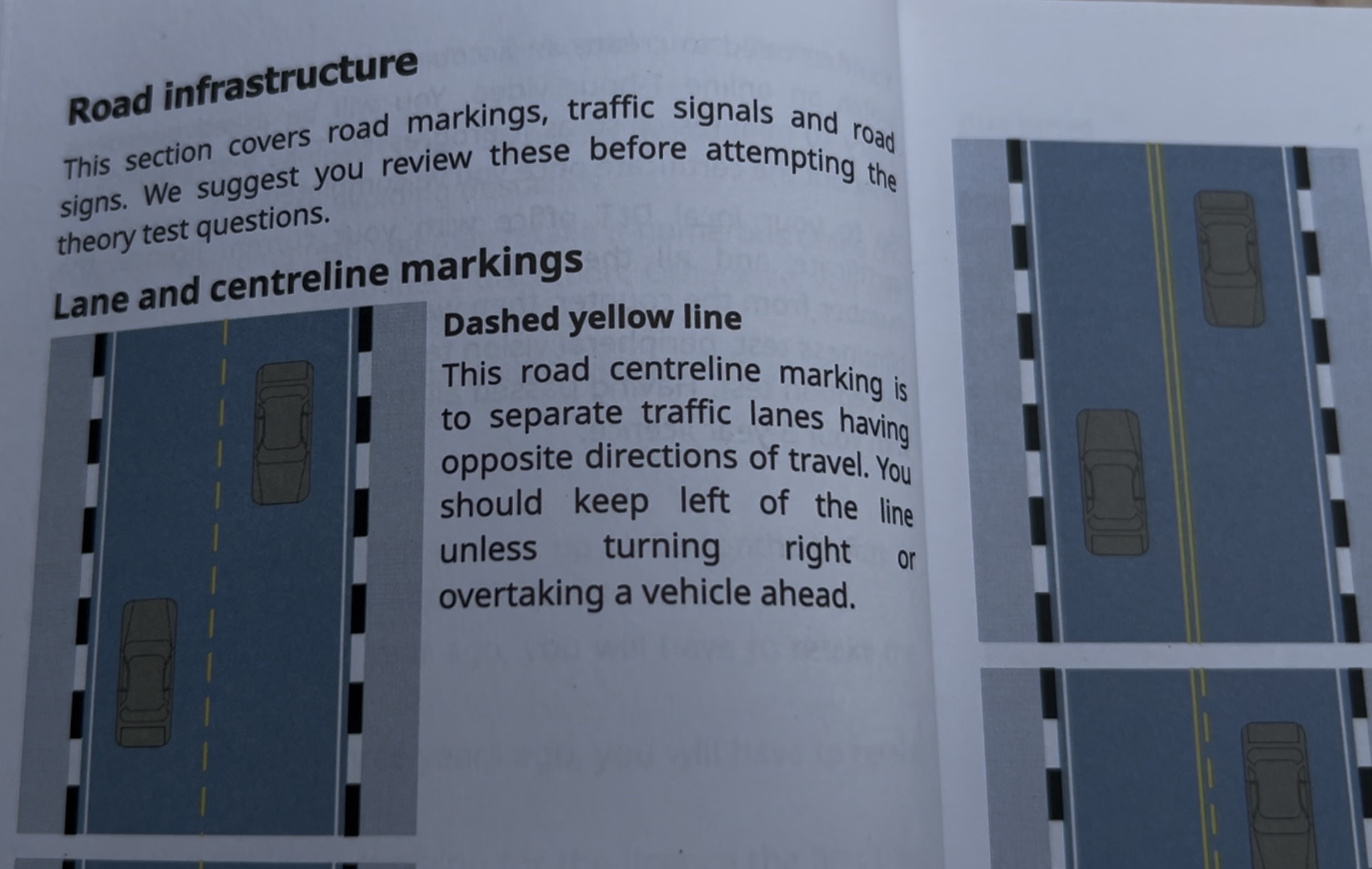
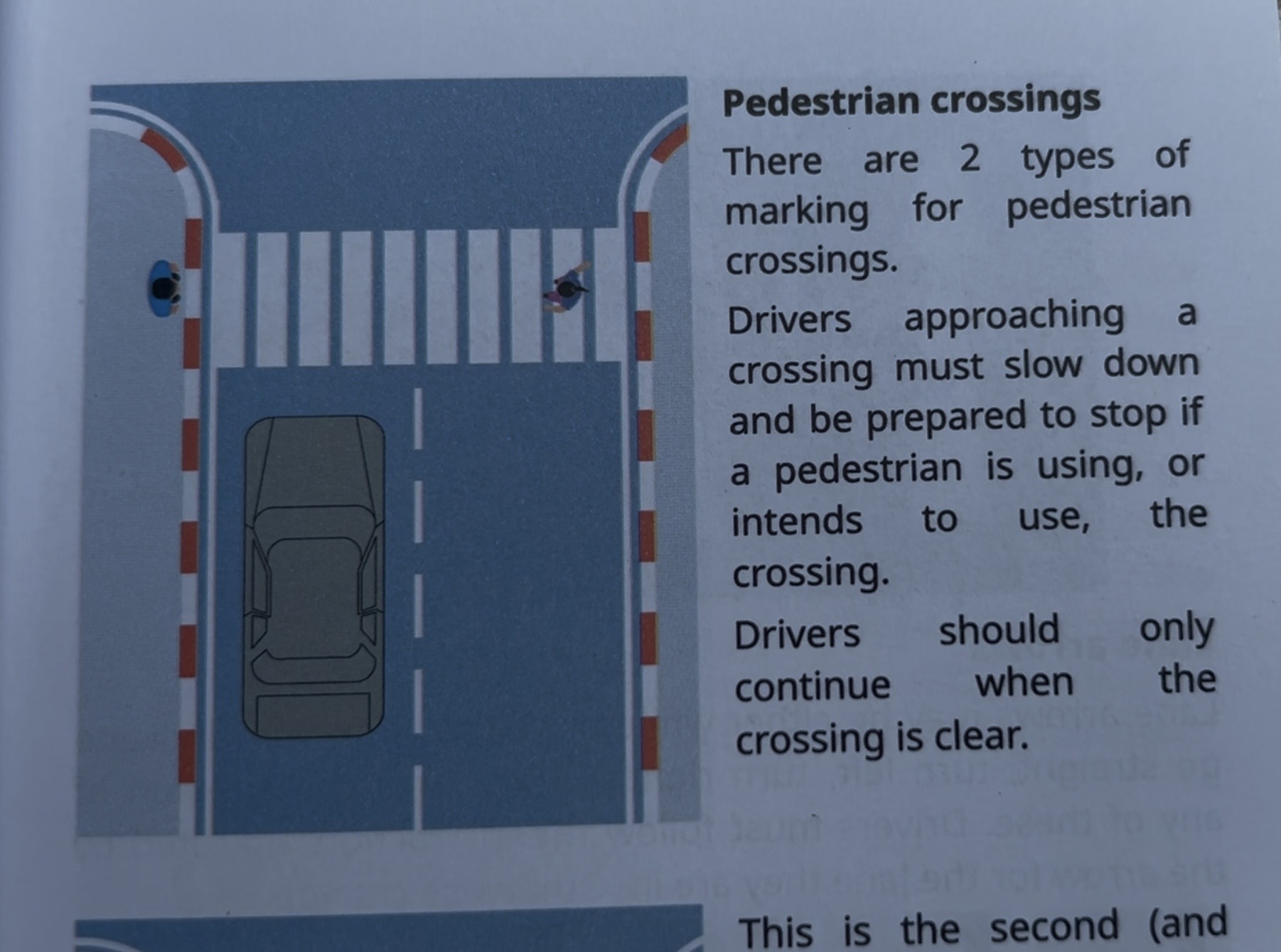

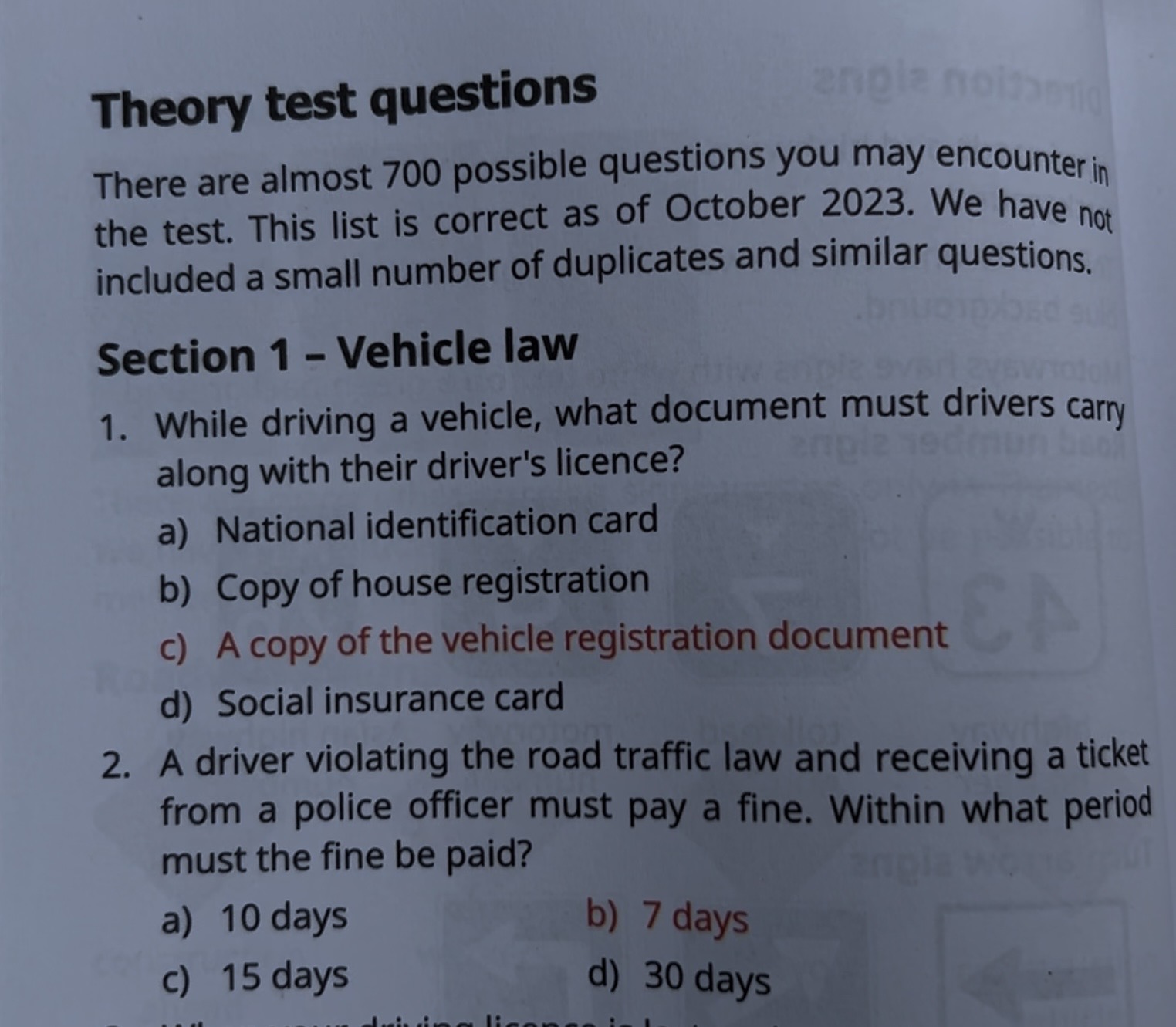
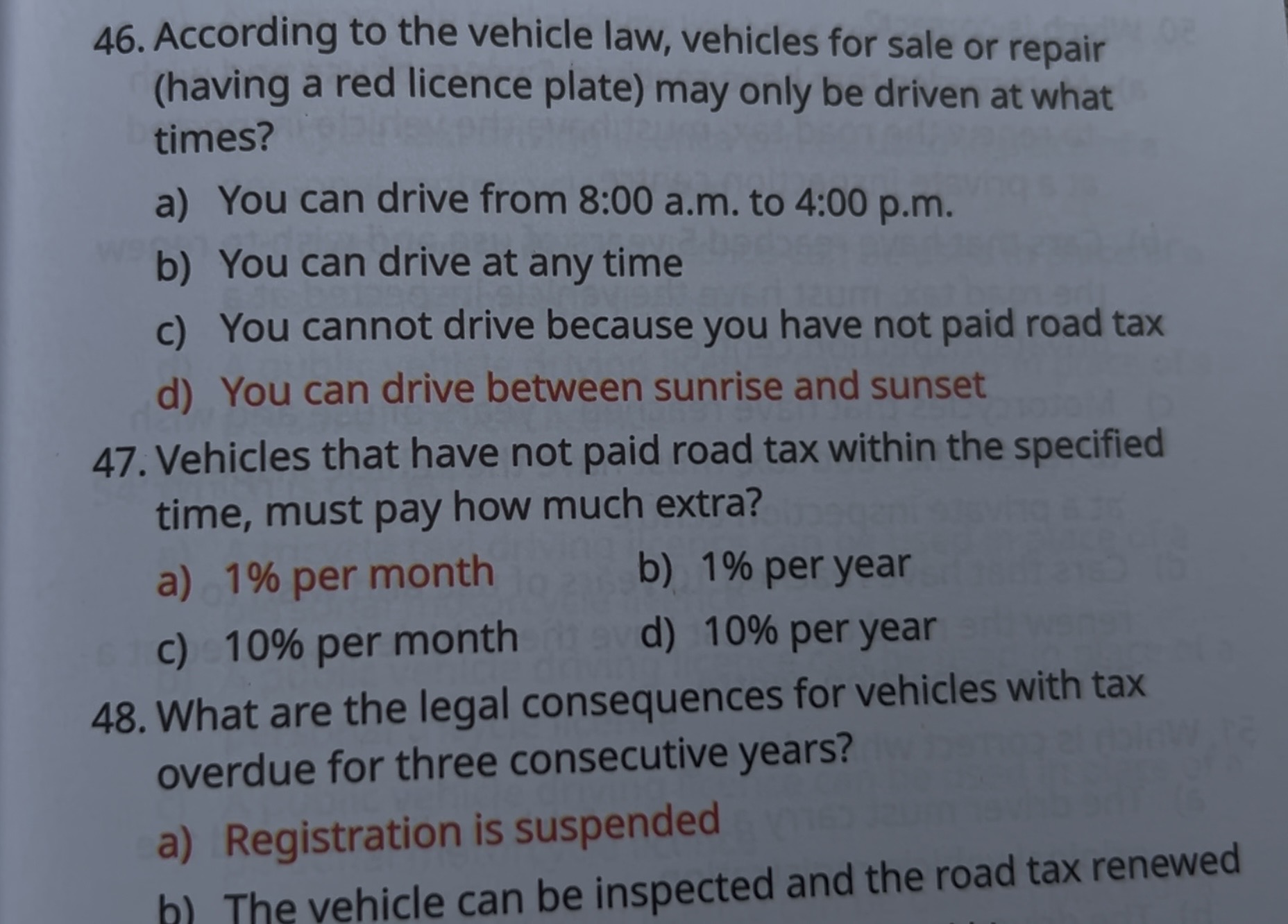
It’s really worth knowing this unusual detail : newly registered vehicles – that is, those with a red number plate – are only permitted to drive between sunrise and sunset. In practice, however, you’re unlikely to be fined.

What are the legal requirements for riding a two- or three-wheeler in Thailand ?
Thai law is very clear : to ride a two-wheeler in Thailand, you MUST hold either :
- an international driving licence that specifies a motorcycle licence in your country of origin.
PLEASE NOTE ! For France, this refers specifically and exclusively to an A licence. Regardless of the engine capacity of the two-wheeler you hire or buy in Thailand, A1 or A2 licences ARE NOT RECOGNISED ! It is essential to be aware of this because hire companies will often not check. You will therefore be able to hire a two-wheeler, BUT in the event of an accident – whether you are at fault or not – NO insurance will cover you if you do not hold both an international driving permit AND an A licence. - The Thai ‘motorcycle’ driving licence, which you can obtain if you have a long-stay visa and proof of residence. This licence is initially valid for 2 years and must then be renewed every 5 years.
Under NO CIRCUMSTANCES should you ride in Thailand without holding a motorcycle licence. If you wish to take the Thai licence test see my article on this subject
Do Thais drive badly ?
Thais aren’t bad drivers ; in fact, they’re quite skilful, especially those on scooters. However, they do drive in a rather distinctive way, and you’ll need to adapt to that.
They start riding scooters at a very young age, around ten years old, often with three, four or even five people on a single vehicle.
On the whole, they drive quite slowly, especially in town (30–50 km/h), but as everywhere, there are a few reckless drivers, and from time to time you see reports on the telly of horrific accidents, often caused by excessive speed. Sadly, young people lose their lives every week.
In Thailand, you have to drive with the flow of traffic. This means there are few complete stops, even at junctions where there’s supposed to be a stop sign. Often, scooters slow down and pass, particularly on the left. Sometimes they also cross the road to turn right. Cars do the same, and everyone passes by slowing down to a greater or lesser extent.
This also means you should NEVER expect to have right of way. At any moment, just when you logically think it’s your turn to go, another vehicle – whether a scooter or a car – is likely to cut you off.
Here’s a scoop – and I’m not going to make any friends saying this – but farangs
farang
farangs
« farang » est un terme générique désignant les Occidentaux blancs, principalement utilisé en Thaïlande et au Laos. Le mot a des origines persanes, provenant du mot « Francs » et s’est répandu pour désigner les Européens occidentaux.
are reckless and drive VERY BADLY ! Reckless because, given Western culture, they should be the first to protect themselves by being properly kitted out and wearing a helmet. But that’s not the case !
In Bangkok, most riders wear helmets because checks are frequent. But in Hua Hin, which is a small provincial town, it’s very rare to be stopped for not wearing a helmet. And as farangs
farang
farangs
« farang » est un terme générique désignant les Occidentaux blancs, principalement utilisé en Thaïlande et au Laos. Le mot a des origines persanes, provenant du mot « Francs » et s’est répandu pour désigner les Européens occidentaux.
are keen on the freedom Thailand offers them compared to European countries, which they consider very restrictive, they take advantage of it in a very unwise way. They think freedom means riding without a helmet and in flip-flops. But this is a false sense of freedom that comes at a very, very high price ! If you have a fall, there’s no mercy.
Here, relative to the number of riders, it’s fair to say that more Thais wear helmets than farangs
farang
farangs
« farang » est un terme générique désignant les Occidentaux blancs, principalement utilisé en Thaïlande et au Laos. Le mot a des origines persanes, provenant du mot « Francs » et s’est répandu pour désigner les Européens occidentaux.
. Many farangs
farang
farangs
« farang » est un terme générique désignant les Occidentaux blancs, principalement utilisé en Thaïlande et au Laos. Le mot a des origines persanes, provenant du mot « Francs » et s’est répandu pour désigner les Européens occidentaux.
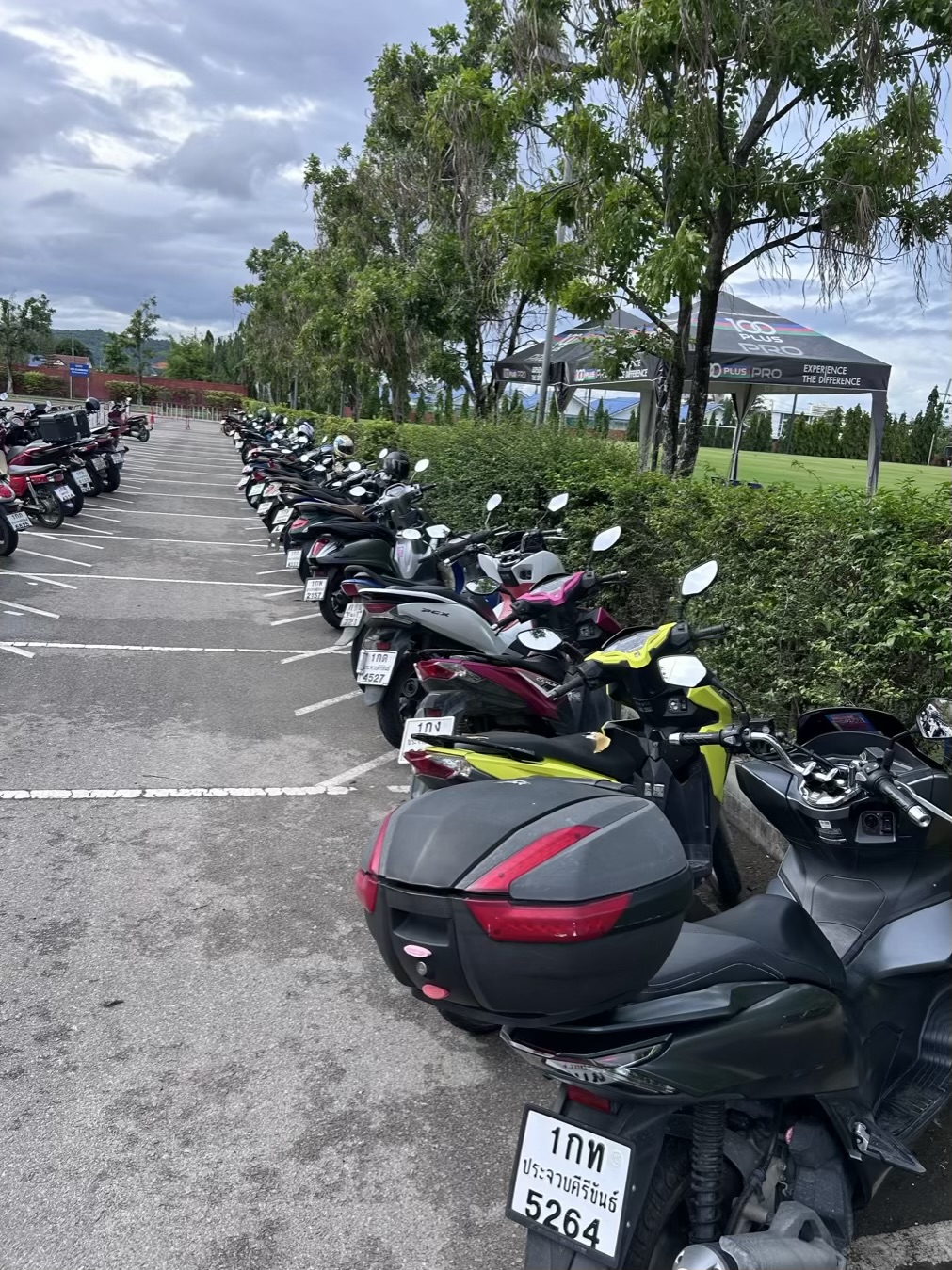
don’t wear one, or they put on a so-called helmet just to avoid a fine. Sometimes it’s a cycling or skateboarding helmet (I’ve even seen a hard hat), or a rubber or leather bowl-shaped helmet, with the strap left undone. Of course, almost all of them ride in flip-flops and without gloves.
_
Today, I arrived at the scene of an accident that had just happened. I didn’t see how it happened ; I just saw the rather elderly farang
farang
farangs
« farang » est un terme générique désignant les Occidentaux blancs, principalement utilisé en Thaïlande et au Laos. Le mot a des origines persanes, provenant du mot « Francs » et s’est répandu pour désigner les Européens occidentaux.
lying on the ground. He was sitting on the ground, his hand was injured, and he looked a bit dazed. Two metres away from him lay his plastic open-face helmet, which hadn’t stayed on his head – as it obviously wasn’t fastened, as is almost always the case. The reason his hand was injured was because he wasn’t wearing gloves. What’s more, he was wearing flip-flops, and I reckon his feet must have been in a right state too.
Yesterday, an Australian running champion died on Koh Samui. Poor 25-year-old woman. According to the information I have so far, she lost control and skidded on a bend on a main road. Yes, but the road was waterlogged from heavy rain ; she was riding without a motorbike licence or an international driving permit, and she wasn’t wearing a helmet. That’s a lot to take in. Especially as this failure to comply with the law not only cost her her life, but also deprived her family of insurance cover for her repatriation to Australia. They’ve had to set up an online fundraising page.
All that because of recklessness. What a waste !
Three-wheeled scooters
A quick clarification for anyone who’s used to riding three-wheeled scooters in France. In France, thanks to a loophole in the law, it’s possible to ride very powerful motorbikes – such as the Piaggio MP3 500 or the Peugeot Métropolis 400 – without a motorbike licence. These are essentially motorbikes disguised as scooters, with two wheels at the front and one at the back. In Thailand, there are no MP3s or Métropolis models. As the Yamaha brand is very well established in Thailand, you can find Tricity 300s with two wheels at the front, though they’re quite expensive.
Let me stop you right there – don’t get your hopes up – the legislation isn’t the same here. And if you want to ride one of these three-wheeled scooters, you’ll still need an international driving licence with a motorcycle endorsement – that doesn’t change anything.
The specific situation regarding salengs
saleng
salengs
Les saleng sont des scooters avec side car. Ils sont utilisés dans une multitude d’activités et de métiers. Il semble qu’ils ne soient pas homologués mais il y en a partout. C’est un des véhicules de base du petit commerce en Thaïlande, mais aussi des activités familiales, artisanales et agricoles.
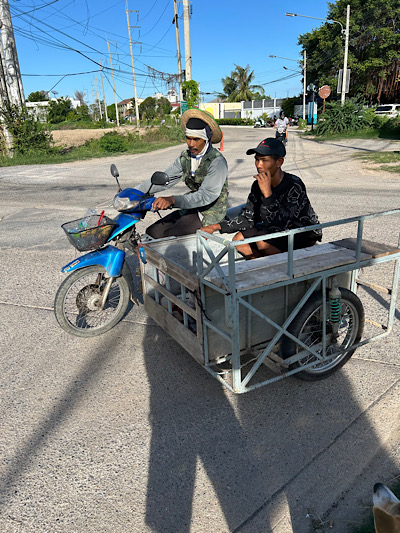
The historical situation (up to early June 2026
Until this year, salengs
saleng
salengs
Les saleng sont des scooters avec side car. Ils sont utilisés dans une multitude d’activités et de métiers. Il semble qu’ils ne soient pas homologués mais il y en a partout. C’est un des véhicules de base du petit commerce en Thaïlande, mais aussi des activités familiales, artisanales et agricoles.
were in an ambiguous legal grey area. Under Thai law, salengs
saleng
salengs
Les saleng sont des scooters avec side car. Ils sont utilisés dans une multitude d’activités et de métiers. Il semble qu’ils ne soient pas homologués mais il y en a partout. C’est un des véhicules de base du petit commerce en Thaïlande, mais aussi des activités familiales, artisanales et agricoles.
could be registered, but only for the transport of goods — not passengers. Carrying passengers on a saleng
saleng
salengs
Les saleng sont des scooters avec side car. Ils sont utilisés dans une multitude d’activités et de métiers. Il semble qu’ils ne soient pas homologués mais il y en a partout. C’est un des véhicules de base du petit commerce en Thaïlande, mais aussi des activités familiales, artisanales et agricoles.
was prohibited under Section 14 of the Motor Vehicles Act 1979, punishable by a maximum fine of 2,000 baht.
In practice, during the roadworthiness test (MOT), the sidecar had to be removed and the vehicle was tested on its own — which meant there was no roadworthiness test for the sidecar itself. A police officer interviewed directly confirmed : ‘It’s not legal, but it’s tolerated because many Thais don’t own a car. ”
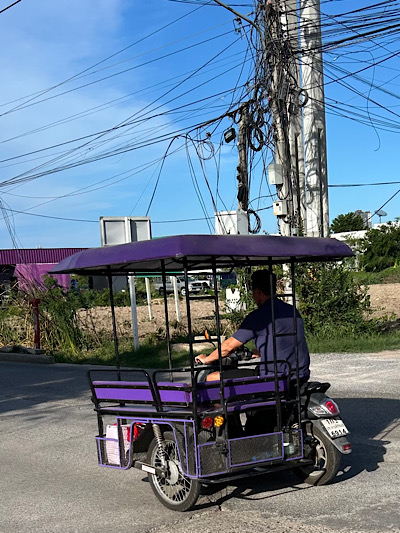
What has just changed (4 June 2026)
The Department of Land Transport (DLT) has officially relaxed the registration rules for motorbike sidecars, introducing a new regulatory framework that formally recognises them as ‘community economy vehicles’. The aim is to bring these widely used vehicles within the formal legal framework, in order to standardise their construction and reduce road risks.
The new technical requirements are as follows : the sidecar must be fitted on the left-hand side of the vehicle, must not obstruct the driver’s field of vision, and must be equipped with effective braking systems, a robust mounting, and a full lighting system including reflectors for night-time visibility. Once the vehicle has been inspected and approved, it will be classified in the new official category RY.12, with a nominal annual tax of just 150 baht.
It is therefore now possible to drive a saleng
saleng
salengs
Les saleng sont des scooters avec side car. Ils sont utilisés dans une multitude d’activités et de métiers. Il semble qu’ils ne soient pas homologués mais il y en a partout. C’est un des véhicules de base du petit commerce en Thaïlande, mais aussi des activités familiales, artisanales et agricoles.
LEGALLY, provided you comply with the licensing requirements ; that is to say, tourists must hold a MOTORCYCLE licence from their country of origin (an ‘A’ licence for France) accompanied by an international driving permit, or, of course, hold a Thai motorcycle licence like myself. Under no circumstances is it legal to ride a saleng
saleng
salengs
Les saleng sont des scooters avec side car. Ils sont utilisés dans une multitude d’activités et de métiers. Il semble qu’ils ne soient pas homologués mais il y en a partout. C’est un des véhicules de base du petit commerce en Thaïlande, mais aussi des activités familiales, artisanales et agricoles.
with a French Category B driving licence.
Specific problems you may encounter on the road
- You’ll often come across vehicles travelling in the wrong direction, especially in towns. Most of the time, these are scooters, but they can also be salengs
saleng
salengs Les saleng sont des scooters avec side car. Ils sont utilisés dans une multitude d’activités et de métiers. Il semble qu’ils ne soient pas homologués mais il y en a partout. C’est un des véhicules de base du petit commerce en Thaïlande, mais aussi des activités familiales, artisanales et agricoles. , which is a bit more of a nuisance because they’re wider. (See the section on salengs saleng
salengs Les saleng sont des scooters avec side car. Ils sont utilisés dans une multitude d’activités et de métiers. Il semble qu’ils ne soient pas homologués mais il y en a partout. C’est un des véhicules de base du petit commerce en Thaïlande, mais aussi des activités familiales, artisanales et agricoles. above).
Why do we come across vehicles travelling in the wrong direction ? This is largely due to the system of changing lanes via U-turns. I’ll explain this in detail. (See the section on U-turns below)